€12.4 million in additional revenue through A/B testing!

Watch for free now
New Study: How AI Search is Changing SEO Visibility in E-Commerce
Read now


Users decide in seconds: buy or bounce, stay or switch to the competition. User Experience (UX) is therefore not just a design detail, but a key driver of revenue, brand strength, and competitiveness. To succeed in 2025, you must treat UX as a strategic profit factor and give it the priority it deserves.
1. Why UX is much more than just "good design" today – and why it directly determines conversions.
2. Which psychological mechanisms turn enthusiasm into long-term customer loyalty.
3. How decision-makers can use UX strategically to reduce costs, increase loyalty, and secure growth.
1. Why UX is much more than just "good design" today – and why it directly determines conversions.
2. Which psychological mechanisms turn enthusiasm into long-term customer loyalty.
3. How decision-makers can use UX strategically to reduce costs, increase loyalty, and secure growth.
Today, users expect more than just a functional website – they expect speed, simplicity, and a compelling experience. A delay of just a few seconds or confusing navigation can be the difference between a sale and a bounce. For businesses, this means User Experience (UX) is no longer just a design detail, but a central factor for profit and brand success.
Whether in e-commerce, digital services, or B2B: excellent UX boosts visibility, conversions, and customer retention – while poor UX costs you revenue, trust, and market share.
User Experience encompasses every interaction a user has with a digital application – from the first millisecond the page loads to the checkout process or customer service. It is not just about "good design," but about the interplay of several layers:
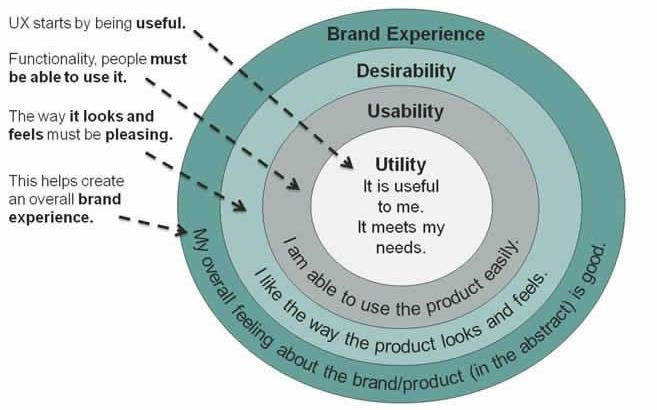
All these points contribute to UX
In 2025, UX can be clearly measured and evaluated:
In short: UX is the foundation of digital value creation. Optimizing it means optimizing not just for Google, but primarily for people – which has a direct impact on conversions and brand strength.
User experience happens not just in the interface, but primarily in the user's mind. Every interaction triggers emotions, expectations, and evaluations – ultimately determining whether an experience is stored as a positive memory or immediately forgotten.
A central role is played by memory: Our short-term memory can only process a limited amount of information. Only when an experience is linked to existing knowledge does it move into long-term memory. This is exactly where the leverage for UX lies: Pages that meet or exceed expectations stick – poor experiences lead to abandonment.
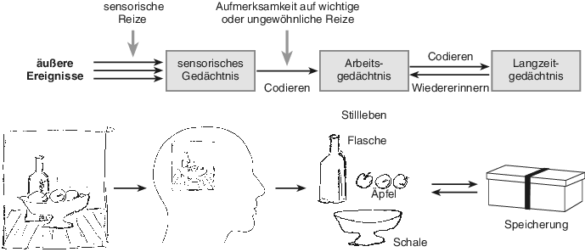
From short-term to long-term memory
Another key is the flow state. Flow describes the state in which users are completely immersed in an activity: everything runs smoothly, obstacles disappear, and time seems to lose its meaning. Digital products can foster flow by:
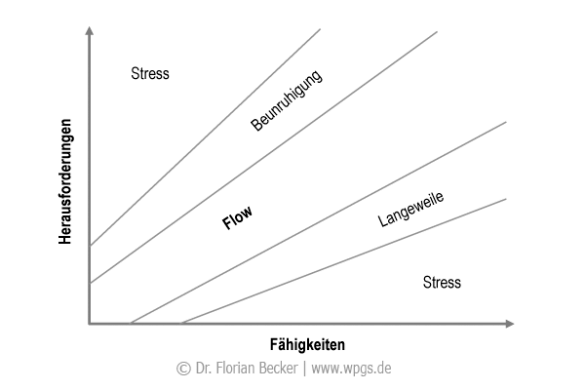
The Flow Theory
The flow state acts like a reward loop in the brain. Users experience happiness, satisfaction, and a sense of competence—feelings they want to repeat. This is exactly what drives retention and loyalty.
For businesses, this means UX is not an end in itself, but a psychological trigger that builds connection. Those who design digital experiences to be effortless, rewarding, and memorable anchor their brand in the minds of their users.
A great user experience doesn't end with the first click. It only becomes truly successful when excitement turns into recurring usage and long-term loyalty . To achieve this, several psychological mechanisms can be strategically applied in a digital context:
In short: Excitement is the starting point, connection is the goal. Successful UX achieves this through small rewards, social signals, personalization, and moments of surprise. This is how a one-time interaction evolves into a lasting relationship with the brand.
The more psychological mechanisms are integrated into the user experience, the greater the temptation to manipulate users. Dark patterns—deliberately misleading designs such as hidden costs, hard-to-find cancellation options, or aggressive pop-ups—may drive conversions in the short term, but they destroy trust and brand loyalty in the long run.
Instead, companies should focus on ethical UX :
The goal is: creating positive experiences that are repeated voluntarily. This is the only way to build sustainable customer loyalty—and a brand that is valued rather than addictive.
For decision-makers, user experience is not just a design issue, but a strategic success factor. Every investment in better UX has a direct impact on key KPIs such as conversion rates, customer retention, and brand perception. Ignoring UX comes at the cost of higher bounce rates, increased acquisition costs, and lower loyalty.
These guidelines show how UX should be strategically applied—and why:
User experience is no longer just a "soft" design topic; it is one of the most powerful business levers in digital competition. Speed, clarity, and delight have a direct impact on a company's key performance indicators:
Companies that view UX as a strategic factor are not investing in "pretty design," but in sustainable growth. Conversely, those who skimp on user experience pay twice – through lost customers, declining visibility, and rising marketing costs. Successful UX doesn't just delight in the short term; it builds long-term engagement. It is the difference between a website that functions and a brand that grows.

.png)


Build SEO in-house or outsource to an agency? Five questions to help you make an honest make-or-buy decision.

AI search has arrived in German online retail: It used to be about whether an AI answer appeared for your search terms. Today, it is about whether your brand is cited as a source within it.
.jpg)
Traditional SEO methods are no longer sufficient for growth. Today, brand clarity, decision-relevant content, and active visibility determine whether SEO generates revenue.
.jpg)
AI Search evaluates not only content, but the comprehensibility of entire brands. Unclear positioning reduces the likelihood of being selected.
.jpg)
AI Search reinforces existing positions. Without clear differentiation, more content in SaaS often leads to more interchangeability rather than more visibility.


.png)
.jpg)