€12.4 million in additional revenue through A/B testing!

Watch for free now
New Study: How AI Search is Changing SEO Visibility in E-Commerce
Read now


No one likes to wait for a slow-loading website. Long loading times frustrate users, damage your conversions and send negative signals to Google. If you optimize your page performance, you not only get satisfied visitors, but also better rankings and lower advertising costs.
1. Why the loading time of your website is crucial
2. Which technical levers increase the speed
3. How AI can help with optimization
4. Which tools are useful for analysis and monitoring
5. Which quick wins have a big impact with little effort
6. How optimizations improve visibility and conversions over the long term
1. Why the loading time of your website is crucial
2. Which technical levers increase the speed
3. How AI can help with optimization
4. Which tools are useful for analysis and monitoring
5. Which quick wins have a big impact with little effort
6. How optimizations improve visibility and conversions over the long term
Slow websites have a direct impact on the user experience. Even a delay of one second can reduce the conversion rate by up to 20 percent. Users jump off, are frustrated, or may never return at all. Paid advertising is also becoming more expensive: The Google Ads quality factor takes loading speed into account, so that slow landing pages cause higher click prices. AI can help by analyzing user data, identifying bounce patterns, and predicting which pages or content should be optimized. In this way, targeted measures can be introduced that improve both user satisfaction and the conversion rate.
To improve your site's load time, it's important to understand the technical aspects. Key figures include the total load time, the time to first byte and the start of the render. Technologies such as HTTP/2, browser caching, or lazy loading can significantly increase speed, while large files, unnecessary redirects, or unoptimized JavaScript and CSS code increase loading time. AI can help here by automatically analyzing the code, identifying the biggest time wasters and providing specific recommendations for action. This allows performance issues to be identified and resolved more quickly before they have a negative impact on user experience and ranking.
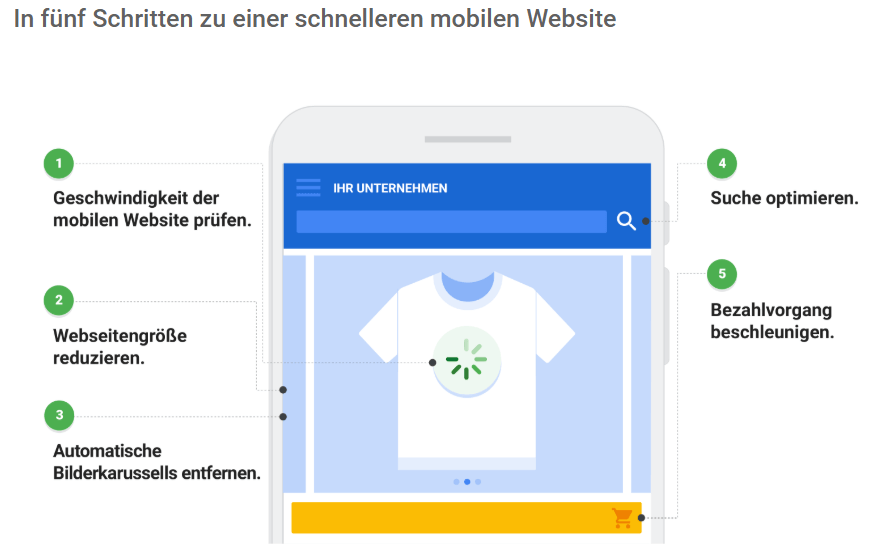
Five steps to a fast mobile website
In order to systematically improve the loading time of your website, it is crucial to use the right tools. Google PageSpeed Insights, Lighthouse and Chrome Developer Tools provide valuable key figures, identify bottlenecks and provide specific recommendations. PageSpeed Insights assesses both desktop and mobile versions of your website, while Lighthouse also analyzes usability and best practices. With Chrome Developer Tools, you can check the load times of individual resources, such as images, CSS, or JavaScript files, in detail.
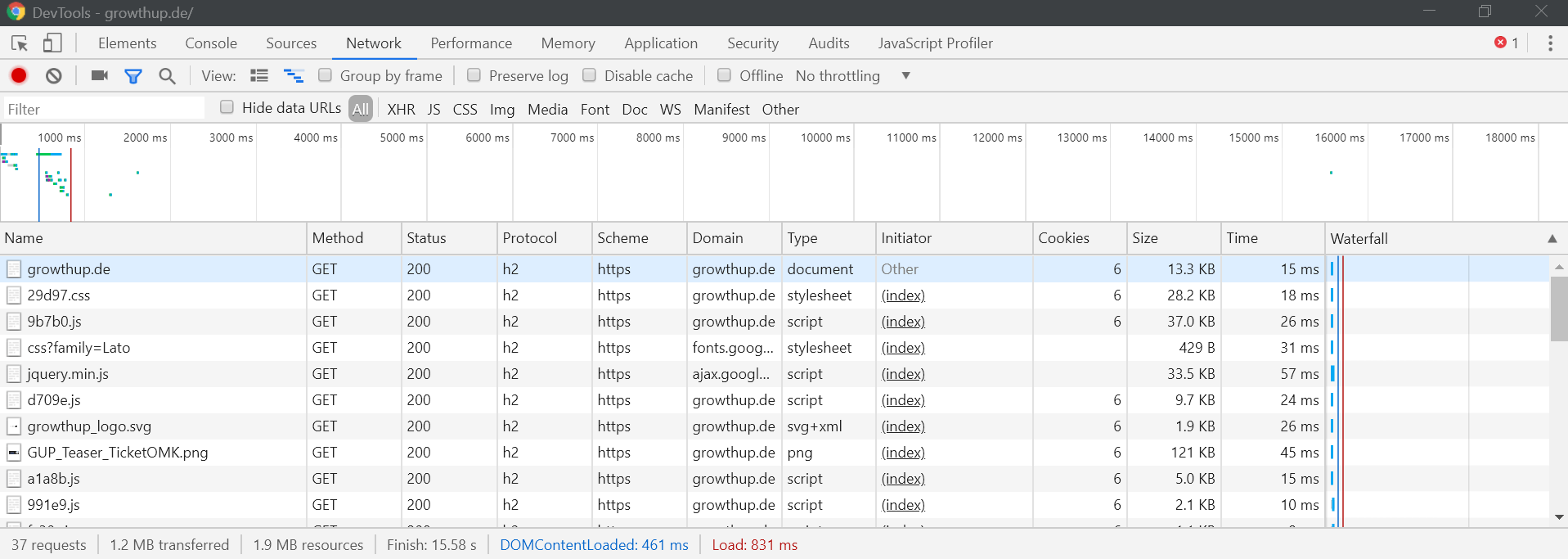
Chrome DevTools screenshot for growthup.de
The “Network” tab is particularly helpful, which shows you which elements load the longest and where there is potential for optimization. AI-powered tools can further automate this analysis. They recognize patterns in load times, prioritize the most important optimization measures and suggest concrete changes so that you can target where you can achieve the biggest effect on speed and user experience.

Test results from Google Test My Site for growthup.de
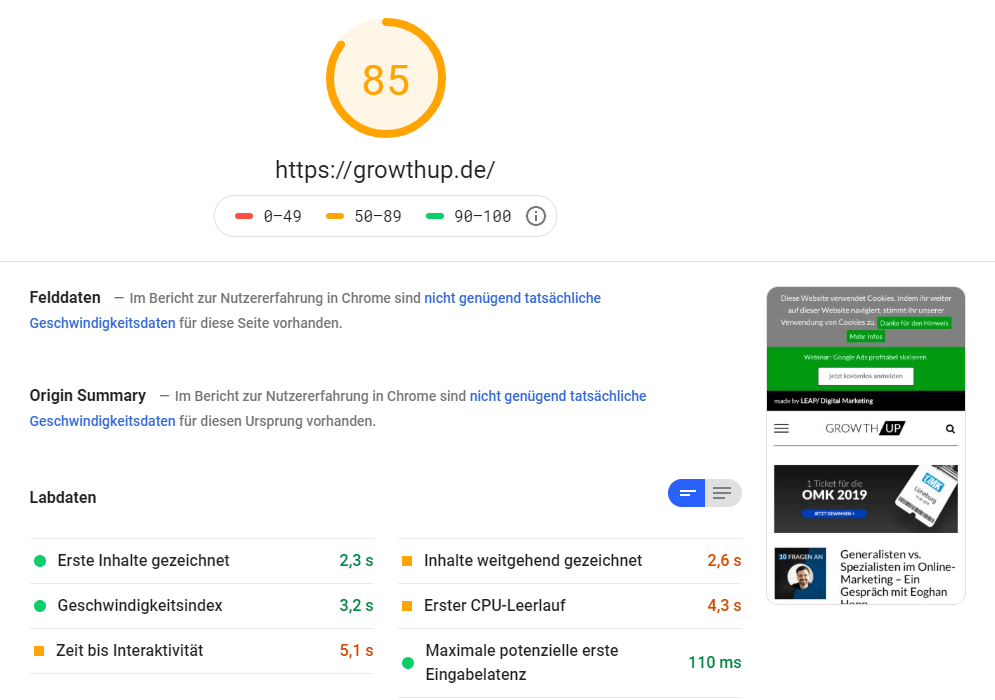
Screenshot: PageSpeed Insights analysis for growthup.de
Complex technical changes do not always have to be carried out in order to achieve noticeable improvements. Many optimizations can be implemented with little effort and bring direct benefits to PageSpeed. These include activating browser caching, compressing images, using efficient image formats such as JPG or PNG, and loading resources only when required via lazy loading.
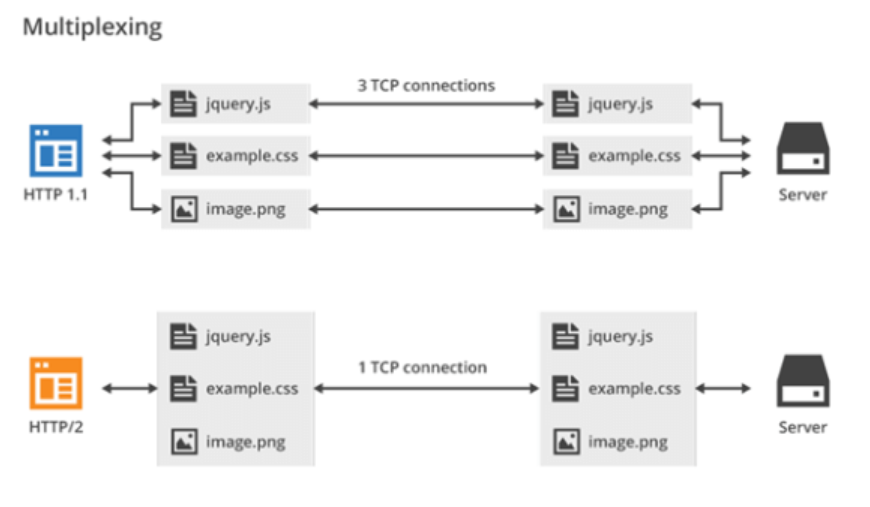
Comparing HTTP 1.1 and HTTP/2
Lazy loading may result in the corresponding reloaded images not ending up in the image index (since the Googlebot does not perform any actions on a website, i.e. does not scroll), but that is not so bad for us in most cases. Many of the affected images are logos of our conference partners or screenshots, which don't look so good in the image search anyway. We were therefore able to install the whole thing without hesitation.
Optimizing CSS and JavaScript, removing unnecessary plugins, or using HTTP/2 can also significantly reduce loading time.
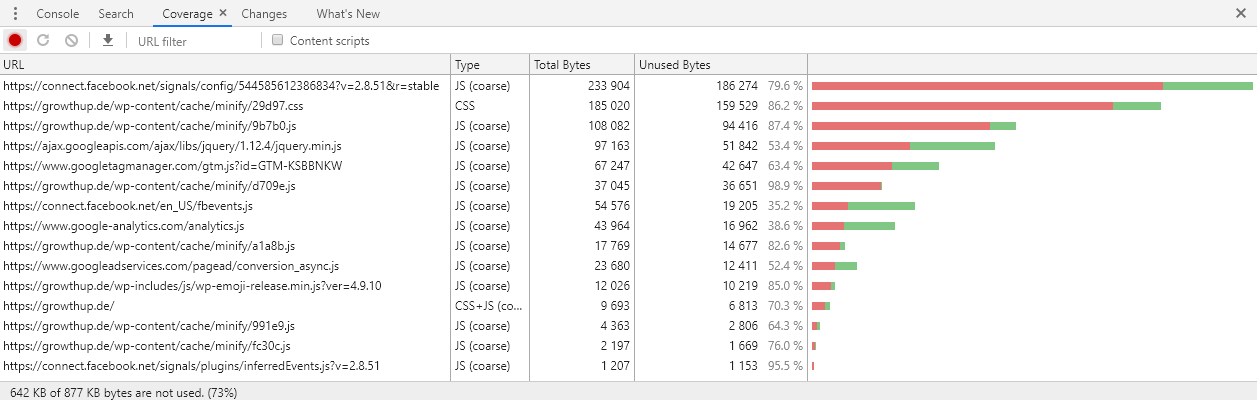
Screenshot Chrome DevTool Unused JS and CSS code for growthup.de
AI can help here by automatically identifying unnecessary scripts, analyzing image sizes, and providing suggestions for the most efficient resource order. This allows you to quickly and specifically implement measures that noticeably improve the user experience, even with large websites.
The overall loading time for new visitors has been significantly improved. The time to first byte was also improved by around a third. Only the start of the render was slowed down a bit, but this is tolerable in comparison. This is due to lazy loading, as the JavaScript file has become larger as a result.
Overall, we have therefore managed to significantly improve the PageSpeed of our magazine with two measures (even though things are still getting better, of course). By optimizing page load time using HTTP/2 (A) and lazy loading (B), we were also able to improve our visibility. This is shown by the Sistrix visibility index in the figure below.
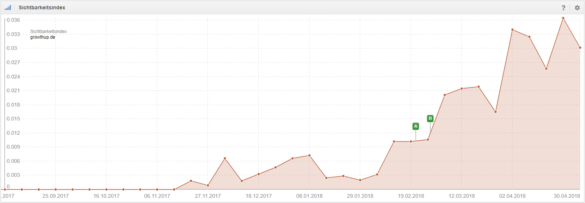
The visibility of growthup.de
Investing in a fast website pays off in the long term. Shorter loading times not only improve the user experience, but also have a positive effect on the conversion rate, as visitors drop off less and become customers more often. At the same time, an optimized PageSpeed strengthens the SEO ranking, as Google prefers fast pages and rates this as a positive user signal. AI-based monitoring systems can continuously monitor performance, automatically identify changes and, if necessary, provide recommendations for action. This ensures that the website stays fast over the long term, supports conversions and increases your visibility in search results.
Fast loading times are essential for the success of a website today. They not only improve the user experience, but also have a direct impact on conversion rates and SEO rankings. Anyone who regularly analyses their pages, recognizes potential and implements optimizations — from browser caching to lazy loading to efficient JavaScript management — creates a solid basis for long-term success. AI can significantly facilitate this process by monitoring load times, identifying bottlenecks, and providing prioritized optimization suggestions. This ensures that your website remains fast, user-friendly and powerful over the long term — while continuously increasing visibility and conversions.
Conversion rate optimization is not a technical project, but a psychological discipline. It combines behavioral research, user experience and business impact.
The five fields of action — Human experience, personalization, purpose, trust, and interaction — show that it is always about people. Companies that strategically anchor these principles achieve sustainable growth.
Successful CRO means:
Understanding data + Interpreting behavior + Use psychology **= ensure growth.

.png)


About one in four shoppers abandons their cart due to mandatory account creation. Here is how a guest checkout removes the barrier without losing customer accounts.

The cost of conversion optimization depends on a few key factors. Learn about pricing models, cost drivers, and why ROI is the more important figure.

Build SEO in-house or outsource to an agency? Five questions to help you make an honest make-or-buy decision.

Not every CRO agency tests systematically. These 7 criteria will help you identify reliable providers before you allocate your budget.
Around 73% of top online shops in Germany do not use an A/B testing tool. Here is why this is the biggest untapped lever in e-commerce and what systematic testing actually achieves.


.png)