€12.4 million in additional revenue through A/B testing!

Watch for free now
New Study: How AI Search is Changing SEO Visibility in E-Commerce
Read now


Link building is still one of the strongest levers in SEO — but it costs time, budget, and resources. The decisive question is therefore: Does link building really pay off for your company?
You can find the answer using an ROI calculation that compares sales potential with investments.
1. Which key figures should you use to calculate ROI in link building in 2025 — from GA4 to Search Console.
2. How to realistically forecast sales and opportunity costs.
3. Why quality, E-E-A-T and business impact are more important than pure link quantities.
1. Which key figures should you use to calculate ROI in link building in 2025 — from GA4 to Search Console.
2. How to realistically forecast sales and opportunity costs.
3. Why quality, E-E-A-T and business impact are more important than pure link quantities.
Every marketing measure must be measured against clear business goals: sales growth, cost savings or brand trust. This also applies to link building. But while click prices are immediately visible on Google Ads, SEO has a more indirect effect. Links not only contribute to rankings, but also to visibility, brand recognition and trust. In order to make well-founded decisions here, you need a model that balances revenue potential, costs and risks.
Before you invest a single euro in link building, you need to know Which keywords are actually worth the effort. Because link building is not an end in itself, but a lever to expand your visibility in places that have sales potential.
The selection of keywords determines the ROI of your links. Choose the wrong search terms, burn off your budget — choose the right ones, tap into new sales potential with manageable effort.
Criteria for a profitable keyword set
Search volume:
Search intent & transaction probability:
Cart value & margin:
Ranking situation:
Competitive environment:
These criteria result in a prioritized keyword set, which forms the basis of every ROI calculation.
Now it's getting specific: With the prioritized keyword set, you can estimate which Traffic and revenue levers Reach them through link building.
Proceed step by step
1. Determine the status quo
1. Define target position
2nd Predict click potential
3rd Calculate sales growth

The ROI is when you compare this potential with the costs of links.
A second method of calculation is the comparison with Google Ads. It makes the dimension more tangible — especially for decision makers who are used to paid search.
Proceed
This results in opportunity costs — i.e. the budget that you would alternatively have to invest in ads to buy the same traffic.
instance
If your link building investment is below this value, the ROI is attractive — and is more sustainable in the long term because you no longer have to pay media costs.
As valuable as ROI calculations are in link building, they always remain a Forecast with uncertainty. Anyone who expects absolute accuracy here is mistaken. Decision-makers should know where the limits lie — and how to methodically cushion them.
Ranking fluctuations and updates:
Seasonality and demand cycles:
Impact of SERP features:
The effect of links is not linear:
The most important finding: forecasts are not an exact forecast, but a strategic planning tool. They help you to quantify opportunities and risks and make better decisions — not to predict the future with millimetre accuracy.
Just a few years ago, the more links, the better. In 2025, the opposite is true. Google no longer rates links in isolation by number, but by Quality, relevance and trust.
What “high-quality” means
Relevance of the source:
Authority & expertise:
Trust & naturalness:
Traffic signals:
E-E-A-T as a strategic benchmark
For ROI, this means that a single link from a relevant, highly authoritative portal can generate more revenue than 50 low-quality links. Quality pays off in the long term — quantity costs money and risks.
Link building in 2025 is not an end in itself, but a Investing in visibility, trust, and revenue. Whoever calculates the ROI prevents wastage and makes well-founded decisions: Which keywords are really worthwhile? Which links contribute to conversions and brand trust? And where are ads or other channels the better alternative?
The most important finding: It is not the quantity of links that counts, but their quality in the context of E-E-A-T. A relevant, trustworthy link can have a more lasting effect than 50 generic links. ROI calculations are not an exact forecast, but a strategic management tool that makes opportunities, risks and opportunity costs visible.
For you as a decision maker, this means:
This turns link building from a cost factor to a verifiable growth driver — with measurable impact on rankings, conversions and profitability.

.png)

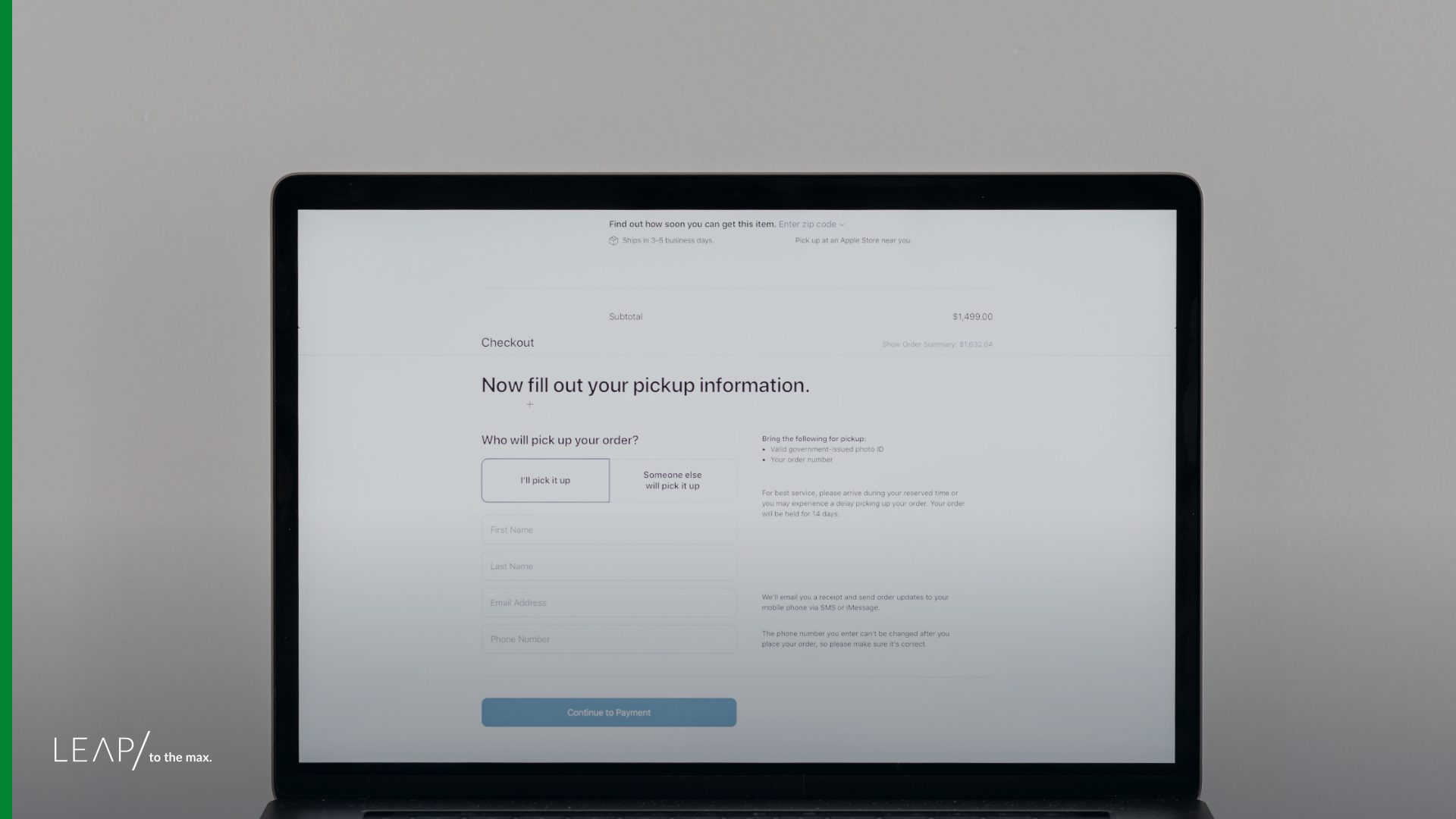
About one in four shoppers abandons their cart due to mandatory account creation. Here is how a guest checkout removes the barrier without losing customer accounts.

The cost of conversion optimization depends on a few key factors. Learn about pricing models, cost drivers, and why ROI is the more important figure.

Build SEO in-house or outsource to an agency? Five questions to help you make an honest make-or-buy decision.

Not every CRO agency tests systematically. These 7 criteria will help you identify reliable providers before you allocate your budget.

Around 73% of top online shops in Germany do not use an A/B testing tool. Here is why this is the biggest untapped lever in e-commerce and what systematic testing actually achieves.


.png)