€12.4 million in additional revenue through A/B testing!

Watch for free now
New Study: How AI Search is Changing SEO Visibility in E-Commerce
Read now


International brand management today means much more than translation and a few country-specific product images. If you want to grow sustainably in several markets, you need to understand what drives people, how they make decisions and which signals trigger trust. It is precisely here that the cultural dimensions according to Geert Hofstede offer a helpful lens. The model from comparative cultural research reduces the complexity of culture to a few, measurable axes. It's not perfect and not complete, but combined with your own user research, data analysis, and experiments, it provides robust hypotheses that you can test in communication, UX, and offer logic. This is how you move away from gut feeling and towards systematic, evidence-based localization that really performs.
In the following, we explain the five central dimensions, show typical implications for marketing, product communication and conversion optimization, and critically assess the limits of the model. Finally, you will receive concrete tips on how to derive testable measures from cultural knowledge and transfer them into a scalable workflow.
1. Cultural dimension No. 1: Distance of power
2. Cultural Dimension No. 2: Individualism & Collectivism
3. Cultural Dimension No. 3: Masculinity & Femininity
4. Cultural dimension No. 4: Avoiding uncertainty
5. Cultural dimension No. 5: Long or short term orientation
6. Criticism of Hofstede and its cultural dimensions — and what you can learn from it
7. How can you use cultural dimensions in marketing for your target group?
8. Conclusion
1. Cultural dimension No. 1: Distance of power
2. Cultural Dimension No. 2: Individualism & Collectivism
3. Cultural Dimension No. 3: Masculinity & Femininity
4. Cultural dimension No. 4: Avoiding uncertainty
5. Cultural dimension No. 5: Long or short term orientation
6. Criticism of Hofstede and its cultural dimensions — and what you can learn from it
7. How can you use cultural dimensions in marketing for your target group?
8. Conclusion
Distance of power describes how natural or legitimate hierarchy and unequal distribution of power are perceived in a society. In cultures with higher People are more accepting of distance from power that superiors, experts or institutions give instructions and make decisions. In cultures with lower Distance from power expects people to have flat structures, participation and transparent reasons.
For marketing, this means that signals of authority, status and exclusivity often work better in markets with a long power distance. Certificates, seals of approval, prominent testimonial figures, “official” partnerships and a deliberately curated, representative visual language create security and differentiation. Price anchors can take on the role of proof of quality here: “Premium” signals reliability. Websites benefit from clear “top-down” structures, clear calls-to-action and reduced discussion space.
In markets with a low power distance, on the other hand, are convincing justifications and participation. Transparent price breakdowns, comparison tables, open roadmaps, community elements, Q&A sections and an accessible brand tone contribute to credibility. In the checkout, freely accessible cancellation information, clear data protection texts and live chat options create a sense of control. A/B tests often show that “empowerment” messages — “You decide,” “Design for yourself,” “Test for free” — draw better than “We know what's good for you.”
It is crucial not to overstate the nuances. Even in countries with a long power gap, digitally savvy target groups now expect clear explanations and service transparency; conversely, users in egalitarian cultures react positively to genuine expertise as long as it is not condescending. Culture provides you with the starting thesis — the test provides confirmation.
Individualistic cultures focus on personal goals, self-fulfillment and personal responsibility. Decisions are understood as an expression of one's own identity. Collectivist cultures prioritize belonging, harmony, and the needs of the group; purchasing decisions take family, team or community much more into account.
In individualistic markets, value propositions perform that Self-optimization and liberty Emphasize: “Become the best version of yourself,” “Develop your potential,” “Tailor everything to your needs.” Personalized configurators, modular plans, and individual rewards reinforce this feeling. In email flows, 1:1 messages (“Your Progress,” “Your Choice”) and KPIs such as “Time Saved Per Person” plausible the added value.
In collectivist contexts, messages work that community, solicitude and social affirmation Highlight: “Good for you—and loved ones,” “Recommended by the team,” “Popular in your neighborhood.” Social proof should be more visibly calibrated to “we”: Group reviews, club or family cases, shared savings benefits (“family subscription”) and referral programs with joint benefits often have a stronger effect than purely personal benefits. UX elements that facilitate joint use — multiple accesses, approvals, shared shopping carts — also contribute directly to conversion.
A common mistake is to confuse individualism with “egoism” and collectivism with “conformism.” In practice, it is rarely about either/or, but about weightings. A clever campaign creates bridges, for example by framing individual benefits in the context of social belonging (“Your contribution makes the team stronger”). You can explain which wording really works through variant tests in ads, landing pages and on-site micros.
Hofstede uses the “masculinity—femininity” axis to describe value orientations, not biological gender roles. “Masculine” stands for competition, status, performance and material success. “Feminine” emphasizes cooperation, care, quality of life and humility.
In “masculine” cultures, messages resonate with success, ambition and superiority. Positions such as “Faster than...”, “No. 1 in...”, “Maximum Performance” and visual codes of victory and prestige often perform above average. Price and product bundles can be differentiated using “Pro-Level” labels, while tight availability triggers (“Only available today for champion price”) create additional pressure.
In “feminine” cultures, balance, surety, sustainability and equivalency central buying motives. Promises such as “Just live well,” “Safe for yourself and others,” “Made with respect,” earn trust. In UX design, a calmer structure of information pays off; seals relating to sustainability, inclusion and fair supply chains are more effective. Service elements — generous return rules, lifetime guarantees, rapid human assistance — also have a direct effect on conversion.
Boundary rather than pigeonhole: Many markets contain subcultures with contrasting preferences (e.g. performance gaming vs. wellness lifestyle). Segment-specific landing pages with appropriate tonality and creative adaptation of the same product performance avoid conflicting goals. Your KPI comparisons should therefore be made at segment and page type level, not just at country level.
This dimension captures how strongly a culture emphasizes security needs, regulatory clarity, and predictability. Hohe Avoiding uncertainty leads to a preference for reliable brands, detailed information, assurance, and formal processes. Low Avoiding uncertainty goes hand in hand with openness to new things, a willingness to experiment and pragmatic tolerance.
This axis is particularly effective for conversion optimization. Increase in markets with a high degree of uncertainty prevention risk reductions The completion rate can be measured: transparent delivery times, visible guarantees, TÜV/ISO seal, clear contract terms, clear incident communication, precise product comparisons and complete FAQ. In forms, explanatory tooltips, plausibility checks and caches reduce abortions. Pricing structures should also be clear; hidden fees or “fine print” cause disproportionate damage.
In markets with low uncertainty avoidance, offers may experimental occur. “Early access”, beta labels, flexible cancellation, pay-as-you-go and iteratively growing feature sets are accepted as long as the basic benefits are immediately noticeable. Creative micro-copy and surprising UI details can create positive attention without triggering suspicion. At the same time, basic hygiene factors (e.g. data protection) remain non-negotiable there — culture does not change the need to clearly meet legal expectations.
It is practicable to test both directions: one variant with maximum risk reduction and formal clarity, a second with a simplified, more emotional story and leaner details. The resulting evidence helps to fine-tune the balance per market and per funnel level.
Short-term cultures reward rapid success, immediate gratification and flexibility. Long-term cultures emphasize persistence, tradition, investments in the future and economical use of resources.
In performance marketing, these preferences determine which inducements work. Short-term markets react strongly to limited-time discounts, instant upgrades, “buy today — use now” mechanics, and scarce availability. Creatives with a clear “now” impulse and tangible rewards increase click-through and initial conversion.
Long-term markets convert better when the Long-term value becomes apparent: total cost of ownership comparisons, durability certificates, extended warranties, resale values, lifetime service or education and skills development. Content formats such as detailed guides, webinars and success stories over the years contribute to trust and brand preference, even if the direct conversion takes longer.
The mistake that many people make: They regard “in the short term” as “just a promo” and “in the long term” as “just a brand.” In fact, both logics can be combined. An example: In a long-term market, you combine a moderate introductory bonus with a strong argument for durability and resale value; in a short-term market, you flank a high immediate discount with reputable but compact proof of product quality to avoid returns. What the mix looks like determines your testing strategy.
Hofstede's model is a helpful starting point, but not an end point. Three lines of criticism are particularly relevant: First, the data basis is historical and is based primarily on a large sample of companies (IBM) from the 1970s/80s. Second aggregated The model is heavily at country level, while regional, social and generational subcultures remain underexposed. Third is culture dynamically: Migration, digitality, pop culture and global crises are shifting values rapidly in some cases.
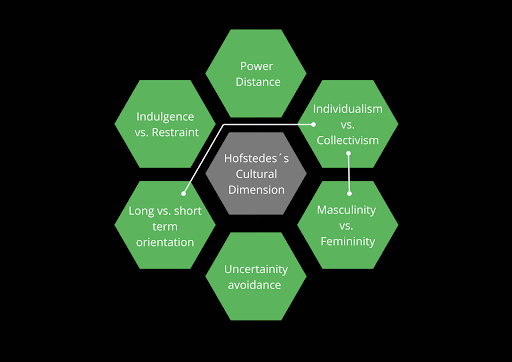
In practice, this means: Use the dimensions as Hypothesis framework, not as a label. Supplement it with current market data, qualitative user interviews, panel surveys, first-party data from your CRM, and behavioral telemetry (e.g. scroll depth, form abandonment reasons). Always interpret results segmented: City/country, age cohorts, income groups, product experience and device often influence behavior more than a passport in a passport. And above all: anchor cultural assumptions in experiments. When a “masculine” copy performs better in a “feminine” culture, that is not a contradiction, but an indication that your segment is prioritizing other values. Reality wins — not the model.
Another learning point: Culture interacts with Purchase phase. Early in the funnel, identity and aspiration images often count; closer to the checkout, security, price and convenience dominate. Successful localization therefore differentiates along the journey: Brand films and social ads address other cultural levers than product comparisons or payment pages.
The transfer to implementation is successful if you have cultural knowledge in testable artifacts Transform — messages, layouts, proof elements, incentive systems. A proven process consists of four steps.
First, you create a cultural diagnosis per market and segment. In addition to Hofstede scores, you will collect context: media consumption, sources of trust, dominant buying motives, competitor codes, regulations. At the same time, you identify barriers (“What really stops people? ”) and drivers (“What triggers action? “). Hypotheses are already emerging here — for example, “In Market A, a highly visible warranty seal reduces buying anxiety” or “In Market B, community recommendations strengthen initial purchases.”
Second, you transfer hypotheses to Copy, visual, and UX variants. “more authority” becomes a headline with an expert statement plus a seal of approval in sight; “more participation” becomes a product card with configurable options and clear comparisons; “uncertainty reduction” becomes a checkout with trust badges, delivery time guarantee and transparent costs; “short-term incentive” becomes a clear, time-bound reward that is noticeable in the above-the-fold. Each variant has a measurable goal at the appropriate level (click on CTA, form progress, completion rate, AOV, return rate).
Third, you implement a Experiment roadmap, which prioritizes cultural hypotheses. Use impact, confidence, and ease scoring to achieve rapid learning effects. Start with high-reach page types (category, product, checkout) before you go into deep niches. Ensure clean tracking (e.g. post-purchase KPIs, returns, LTV) so that short-term uplifts don't destroy long-term value. In markets with a high degree of uncertainty avoidance, tests with security and clarity elements are often “low-hanging fruits.” In collectivist environments, social proof adaptations often provide the first profits.
Fourthly, anchor the results in scalable components. Successful variants are transferred to your system design as design tokens, copy patterns and modular building blocks. This allows them to be consistently rolled out in other campaigns and page types. At the same time, you document “cultural do's & don'ts” per market so that brand, performance and product teams work on a common knowledge base and don't have to fight for every insight again.
It is helpful to have culture not only as an external factor, but as Part of the brand identity to understand. A brand can remain consistent across cultures if it keeps its core values clear and varies its forms of expression locally. This strengthens recognition without falling into cultural stereotypes. A solid experimental setup acts as a safety net: It allows bold adaptations because the data quickly shows whether there is a deviation.
An e-commerce provider is testing the same product advantage — “long shelf life” — in two markets. In Market X (long-term orientation, high uncertainty avoidance), the variant with a five-year warranty, production transparency and laboratory certificate clearly wins out. In market Y (short-term focus, low uncertainty avoidance), a variant with an immediate discount and “try and return without risk” performs better, even though the warranty is the same. Conversion is increasing in both markets, but for different cultural reasons. The company then standardizes two patterns and defines clear rules as to when which pattern is played out. Cultural knowledge is thus from “nice-to-know” to operational levers became.
Hofstede's cultural dimensions are not an oracle, but a useful grid for understanding markets more quickly, deriving hypotheses in a structured manner and making creative and UX decisions measurable. Used correctly — i.e. combined with segmented user research, clean tracking, and consistent A/B testing — they help you localize messages, evidence, and experiences in such a way that they feel familiar and differentiate at the same time. Culture is not a fixed label, but a set of probabilities. Those who respect and empirically test these probabilities build brand trust, reduce friction in the funnel and improve their unit economics across national borders — over and over again.

.png)


About one in four shoppers abandons their cart due to mandatory account creation. Here is how a guest checkout removes the barrier without losing customer accounts.

The cost of conversion optimization depends on a few key factors. Learn about pricing models, cost drivers, and why ROI is the more important figure.

Build SEO in-house or outsource to an agency? Five questions to help you make an honest make-or-buy decision.

Not every CRO agency tests systematically. These 7 criteria will help you identify reliable providers before you allocate your budget.

Around 73% of top online shops in Germany do not use an A/B testing tool. Here is why this is the biggest untapped lever in e-commerce and what systematic testing actually achieves.


.png)