€12.4 million in additional revenue through A/B testing!

Watch for free now
New Study: How AI Search is Changing SEO Visibility in E-Commerce
Read now


Digital growth strategies only work on a stable basis. Backlinks remain one of the most important levers for SEO-driven growth. At the same time, they pose risks: Low-quality or problematic links can not only reduce your ranking, but also influence your brand's reputation and sales. In this article, you will learn how to identify bad backlinks, correctly evaluate them and strategically reduce them — without losing valuable opportunities.
1. How do you recognize bad backlinks?
2. Indicators that may be ambiguous
3. What do you have to do about bad domains?
4. Strategic perspective: Why clean backlinks are crucial
5. conclusion
1. How do you recognize bad backlinks?
2. Indicators that may be ambiguous
3. What do you have to do about bad domains?
4. Strategic perspective: Why clean backlinks are crucial
5. conclusion
Not every link has a positive effect on your website. If SEO is to be a predictable revenue lever for your company, the quality of your backlinks is crucial. Typical characteristics of problematic links include:
a) Irrelevant sources
Links from websites that have nothing to do with your field of business provide no added value. Examples: A SaaS provider that receives backlinks from a fashion forum, or an industrial group whose website is linked from automated link directories.
Tip: Prioritize links that not only bring authority, but also generate relevant traffic, potential leads, or brand trust.
b) Low-quality or “thin content”
Links from content that offer little added value, are artificially generated or are extremely keyword-heavy are considered harmful. This includes:
Strategic benefits: Remove or disavow these links to Algorithm risks to minimize and protect the authority of your sites.
c) Link networks and spam sites
Automated link networks or pages that exist exclusively for the purpose of ranking manipulation are particularly risky. Google recognizes such patterns ever faster and reacts with significant devaluations or manual measures.
A clean link profile therefore also means distancing yourself from such links. If they are not identified and neutralized in time, they can lead to lasting ranking and visibility losses — and, in the worst case, jeopardize the entire SEO strategy.
d) Technically problematic domains
Sites with malware, hacked content, or poor indexing are also risky. Links from such domains can not only reduce SEO values, but also Brand Trust-Affect image.
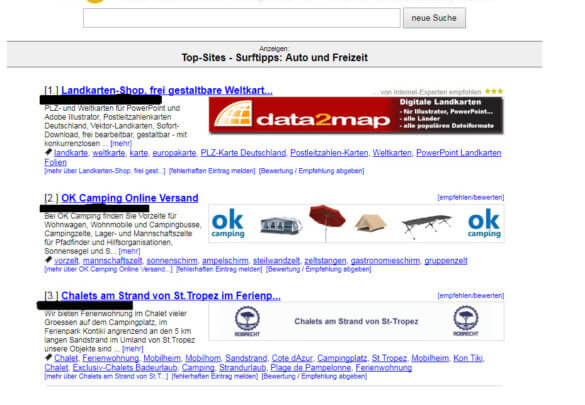
What are these links supposed to do for you?
Not every potentially “bad” link needs to be removed immediately. You should Weigh up strategic opportunities:
a) Links from forums or community sites
The following procedure is recommended for links of this type:
b) Low-authority domains
Smaller websites often have low domain metrics but can still deliver niche-relevant traffic or conversion opportunities.
Insight: An isolated link of low authority can be strategically valuable when it delivers high-quality traffic or addresses a new market segment.
c) Automatically generated content
AI-powered content sometimes seems problematic, but often provides valuable backlinks when professionally maintained. The question posed here is similar to links from forums and communities: Does the risk or strategic benefit resulting from the link prevail?
Valuable backlink or unnecessary risk?
Not every ambiguous link has negative consequences for your website. Some can even have a positive effect on your traffic. To properly balance the risk and value of a link, you can work with the following three steps:
1. Analysis of potentials
If the link brings real visitors who convert or brand, it has value — regardless of low domain authority.
2. Assessment of risks
If several of these risk factors apply, it is more likely that Google will rate the link negatively.
3. Strategic decision
Practical rule of thumb:
Be careful here if you don't want your site to be punished
The approach depends on risk and the potential impact on sales and visibility. We recommend a three-stage process model:
Step 1: Direct contact
Step 2: Disavow measure
Important when using the disavow tool
The disavow tool should always be used with care. Every disavowed link is completely ignored by Google — this also means that potential traffic and relevance are lost. Therefore, only use it for links that have no strategic use and at the same time pose a clear risk to your link profile. For everything else, the following applies: observe, evaluate, weigh up.
Step 3: Preventive monitoring
For corporations and large SMEs, a healthy link profile is not a nice-to-have, but a key growth driver:
Structured link management thus not only ensures your SEO performance, but also has a direct effect on the digital competitiveness of your company.
Bad backlinks are not a random SEO problem, but a clearly identifiable risk to sales, visibility, and profitability. With a systematic approach that includes identification, evaluation and dismantling, you secure your digital growth strategy:
Takeaway for you as a decision maker:
Clean backlinks are a measurable lever for predictable, profitable growth. They belong in every digital growth strategy because they are seen by search engines as a sign of trust for your website. As a result, they help you achieve better rankings, more organic traffic, and increased brand awareness. However, bad backlinks can have the exact opposite effect or even be punished. Therefore, regularly qualifying your backlinks is an absolute necessity.

.png)


Build SEO in-house or outsource to an agency? Five questions to help you make an honest make-or-buy decision.

AI search has arrived in German online retail: It used to be about whether an AI answer appeared for your search terms. Today, it is about whether your brand is cited as a source within it.
.jpg)
Traditional SEO methods are no longer sufficient for growth. Today, brand clarity, decision-relevant content, and active visibility determine whether SEO generates revenue.
.jpg)
AI Search evaluates not only content, but the comprehensibility of entire brands. Unclear positioning reduces the likelihood of being selected.
.jpg)
AI traffic is still low, but converts significantly better. Users are pre-qualified, making conversion even more important than traffic.


.png)
.jpg)