€12.4 million in additional revenue through A/B testing!

Watch for free now
New Study: How AI Search is Changing SEO Visibility in E-Commerce
Read now


Conversion rate optimization (CRO) today is much more than just technical fine-tuning. It determines whether a company can scale its growth or fall behind in the competition. In a digitalized world in which users are confronted with hundreds of offers every day, a good product is not enough. What is decisive is the ability to to understand and meet the psychological needs of the target group.
This article shows how human experience, personalization, purpose, trust, and interaction as five central fields of action have an impact — and how companies can use them specifically for more conversions.
1. Why is conversion rate optimization so important today?
2. Why is the “human factor” psychologically significant?
3. CRO action area No. 1: Human Experience
4. CRO action area No. 2: Personalization
5. CRO action area No. 3: Purpose
6th CRO Area of Action No. 4: Trust & Security
7. CRO action area No. 5: Interaction
8. Conclusion: CRO is psychology in action
1. Why is conversion rate optimization so important today?
2. Why is the “human factor” psychologically significant?
3. CRO action area No. 1: Human Experience
4. CRO action area No. 2: Personalization
5. CRO action area No. 3: Purpose
6th CRO Area of Action No. 4: Trust & Security
7. CRO action area No. 5: Interaction
8. Conclusion: CRO is psychology in action
E-commerce has grown up over the last ten years. Traffic costs are constantly increasing, competition is global, and users compare offers within seconds. If you don't manage to efficiently convert visitors into customers, you burn your budget.
Studies show:
In short, traffic without conversion is worthless. As a result, the focus is shifting more and more from pure reach to conversion quality.
Technologies, algorithms, and tools are interchangeable. Not the human being. Users rarely make rational decisions. Purchasing decisions arise from a complex interplay of emotions, heuristics, trust and social norms.
Psychological effects such as Social proof, scarcity, loss aversion, or cognitive ease Determine whether an action is being performed. Anyone who ignores these principles loses sales potential. If you strategically integrate them, you achieve competitive advantages that are barely duplicable.
Psychology shows: Users are not only looking for products, but also for Self-affirmation, belonging and meaning. CRO must therefore always start at two levels: functionally (clear structures, smooth processes) and emotive (Trust, closeness, motivation).
From usability to human experience
In the past, people primarily talked about usability — today they talked about human experience. The difference: It's not just about an interface working, but that it appeals to, motivates and inspires people.
Psychological levers
practical example
A fashion retailer tested the product presentation: sterile cutouts vs. pictures with real people in everyday situations. Outcome: +18% more add-to-cart actions through human presentation.
recommendation
Clearly define your personas and check whether your content humanly approachable works or is more technically-distant. The more users emotionally dock, the higher the probability of a conversion.
Why personalization works
People react more positively when they feel that a brand knows them. Psychologically, personalization activates the principle of Relevance and appreciation.
From simple communication to AI
Structured link management thus not only ensures your SEO performance, but also has a direct effect on the digital competitiveness of your company.
Opportunities & risks
Over-personalization can create distrust. Transparency and options are mandatory. Successful personalization works subtle and helpful, not intrusive.
practical example
An electronics retailer segmented users by willingness to buy: High-quality recommendations for “high-intent” visitors, inspiration for “research fashion” visitors. Outcome: +25% conversion rate in the segment with a clear purchase intention.
More than a trend
Purpose is not a marketing gimmick, but a psychological anchor of identification. People are more likely to buy from brands that share their values.
Psychological basis
practical example
An outdoor shop tested CO₂ neutrality as a USP in the checkout. 38% of users opted for the CO₂-neutral variant, even if it was slightly more expensive. At the same time, the perceived added value increased the overall conversion rate of 12%.
recommendation
Clearly define your purpose, communicate it consistently, and check whether target groups consider it as authentically perceive.
Psychological basis
Trust is a basic need. Online, this means that users want security, control and transparency.
Leverage for trust
practical example
With a simple trust element (“Your data is 100% encrypted”), a financial services provider increased the form completion rate by 21%.
recommendation
Don't think of trust as an add-on, but as central conversion driver. Every doubt in the funnel costs revenue.
From consumption to co-creation
People don't just want to consume, they want to help shape it. Interaction activates the need for Autonomy and Influence.
forms of interaction
practical example
A furniture retailer implemented an online configurator. Instead of passively scrolling through catalogs, users could design sofas according to size, color and material. Outcome: +30% more time spent, +22% more conversions.
recommendation
Interaction not only increases conversion, but also Brand Engagement. Experiment with small interaction elements before you develop complex tools.
Conversion rate optimization is not a technical project, but a psychological discipline. It combines behavioral research, user experience and business impact.
The five fields of action — Human experience, personalization, purpose, trust, and interaction — show that it is always about people. Companies that strategically anchor these principles achieve sustainable growth.
Successful CRO means:
Understanding data + Interpreting behavior + Use psychology **= ensure growth.

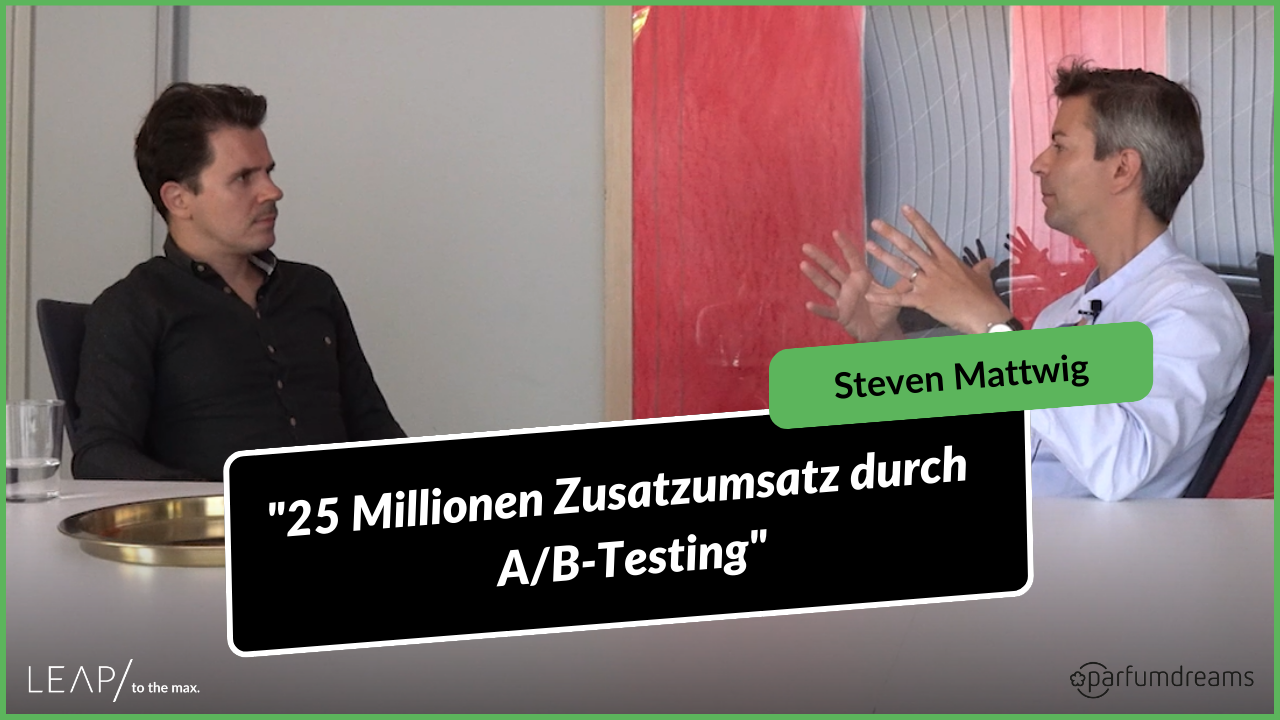

How much revenue can be generated through psychologically grounded testing hypotheses? This case study reveals how Parfumdreams achieved predictable growth rather than random uplifts by fostering a data-driven testing culture—resulting in over €25 million in three years.
.png)


About one in four shoppers abandons their cart due to mandatory account creation. Here is how a guest checkout removes the barrier without losing customer accounts.

Most purchases are abandoned on smartphones. Discover where mobile checkouts fail and the levers you can use to boost your mobile conversion.

Around 7 out of 10 shopping carts are abandoned. Here are the known causes and the levers you can use to specifically lower your abandonment rate.

The cost of conversion optimization depends on a few key factors. Learn about pricing models, cost drivers, and why ROI is the more important figure.

Not every CRO agency tests systematically. These 7 criteria will help you identify reliable providers before you allocate your budget.


.png)