€12.4 million in additional revenue through A/B testing!

Watch for free now
New Study: How AI Search is Changing SEO Visibility in E-Commerce
Read now


Many companies optimize their websites using best practices and quick wins. But if you want more conversions in the long term, you need more than just simple tips: a clear framework. This is exactly where WiderFunnel's LIFT model comes in — a standard in conversion optimization for years.
1. What are the six factors that make up the LIFT model,
2. How to use it to identify conversion drivers and conversion inhibitors,
3.And why it is more relevant than ever in 2025 to set up data-driven tests.
1. What are the six factors that make up the LIFT model,
2. How to use it to identify conversion drivers and conversion inhibitors,
3.And why it is more relevant than ever in 2025 to set up data-driven tests.
LIFT stands for Landingpage Influence Function for Tests. The model was developed by WiderFunnel as an analysis and testing framework for conversion optimization.
The concept: Every landing page—or website—is examined based on six factors. This allows for the development of A/B testing hypotheses that are based on a structured model rather than gut feeling.
At the center is the value proposition. It determines whether users immediately understand why they should buy from you. In addition, you examine five other factors: three conversion drivers (relevance, clarity, urgency) and two conversion inhibitors (distraction, anxiety).
The LIFT model consists of six factors in total, each representing an optimization lever for businesses. However, the LIFT model only unfolds its full potential when used in combination—as a clear framework for conversion optimization, hypothesis generation, and A/B testing.
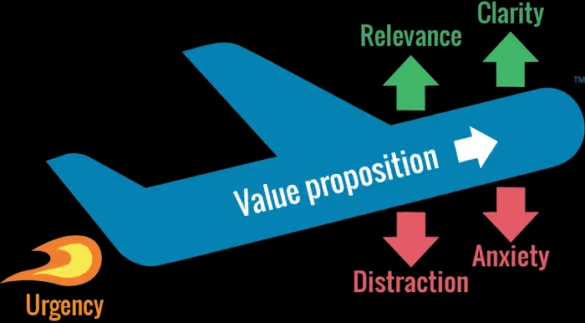
The six factors of the LIFT model and their influence on the framework © WiderFunnel
1. Value Proposition – Your benefit promise
The value proposition is the heart of the model and the strongest lever for conversion. It answers the central question: "Why should I buy here—and not from the competition?" Users want to immediately recognize the unique benefit they receive. It is not enough to be "good" across the board—it is about standing out in one specific area.
Examples and levers:
2. Relevance – does the page meet expectations?
Relevance means that the page delivers exactly what users expect. Every click is made with an intention—if the landing page does not fulfill this expectation, frustration arises. A consistent "message match" between the ad, search result, and landing page is particularly important.
Examples and levers:
3. Clarity – Clarity in communication and design
Clarity determines whether a visitor understands what it's all about in seconds – or bounces. This includes concise messaging, clear visual hierarchies, and unambiguous calls to action. Overloaded design or gimmicks, on the other hand, are distracting and defeat the purpose.
Examples and levers:
4. Urgency – Creating a sense of urgency
Urgency is one of the most powerful psychological triggers in online marketing. It often determines whether a user acts immediately or postpones the purchase – and perhaps bounces entirely later on.
The feeling of needing to act now comes from two sources: the user's internal motivation (e.g., when they have an acute need) and external impulses such as time-limited offers or scarcity signals. Successful sites manage to combine both dimensions: they tap into the existing need and reinforce it with clear incentives to act.
Important here: Authenticity. Anyone who suggests artificial scarcity or creates false urgency quickly gambles away trust – and with it, the conversion advantage.
Examples and levers:
5. Distraction – Avoiding distractions
Distractions are the silent killer of any conversion strategy. Users naturally have a very limited attention span – studies show that they scan a page in fractions of a second before deciding whether to stay or leave. Every unnecessary option, every visual gimmick, and every piece of redundant information increases the risk of them being diverted from the actual goal.
A successful landing page or website is therefore characterized by its ability to consistently direct attention toward the primary goal – whether that is a purchase, a sign-up, or a download. This does not mean that design or additional content are superfluous; on the contrary, they are valuable when they support the main conversion. Everything else must be critically questioned or removed.
Examples and levers:
6. Anxiety – Reducing uncertainty
Uncertainty is one of the biggest barriers in online retail. Users are inherently skeptical when it comes to personal data, payment information, or the credibility of a provider. Even small doubts – an unprofessional layout, missing contact details, or contradictory information – can be enough to cause them to abandon the purchase process.
That is why it is crucial to actively build trust. This is achieved through visible trust signals, transparent processes, and a clear, error-free presentation. It is particularly important to address potential fears early on: How easy is the return process? What guarantee do I have? Is the payment secure? The more clearly these questions are answered, the more likely the user is to take the next step.
Examples and levers:
The LIFT model provides you with hypotheses. What it doesn't provide is the answer to which of these actually works for your users. For that, you need tests, and that is exactly where most people stop: 76 percent of the 2,496 largest German online shops do not use an A/B testing tool. The model then becomes a checklist instead of a tool. Its true value only emerges when you test the six factors against each other individually.
Our study with SISTRIX shows just how widespread systematic testing really is in German retail study with SISTRIX.
The LIFT model is not a theoretical concept, but a tool you can use to approach your conversion optimization in a structured way. It helps you move beyond gut feeling and test hypotheses in a targeted manner.
The process is simple:
The LIFT model shows that successful conversion optimization is not a guessing game, but a structured process. Those who consistently check their pages for value proposition, relevance, clarity, urgency, distractions, and uncertainty will systematically find the levers for increased revenue.
The model provides decision-makers with a clear framework for testing hypotheses, gaining insights, and sustainably increasing conversions. Integrating the LIFT model into your optimization processes creates a foundation for continuous growth—regardless of your industry or market environment.

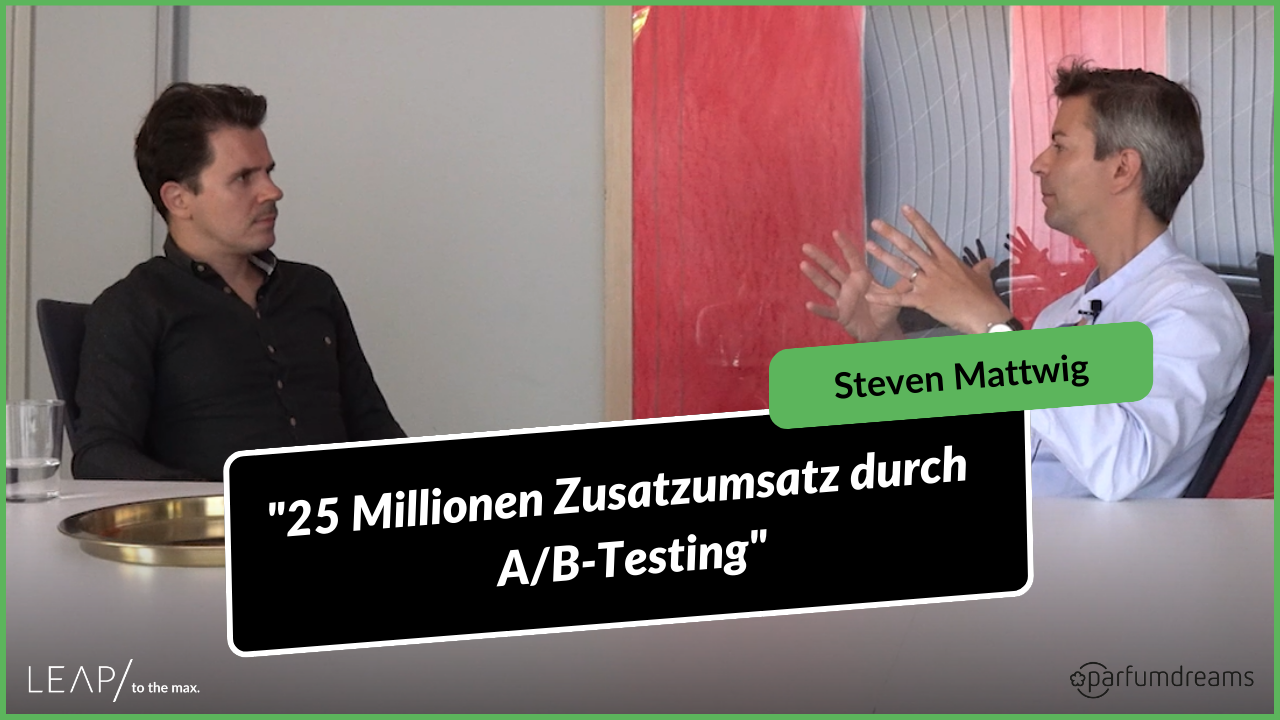

How do you turn a theoretical framework into a scalable testing program? This case study on Parfumdreams shows how data-driven hypothesis generation across the entire user journey led to over €25 million in additional revenue in just three years.
.png)

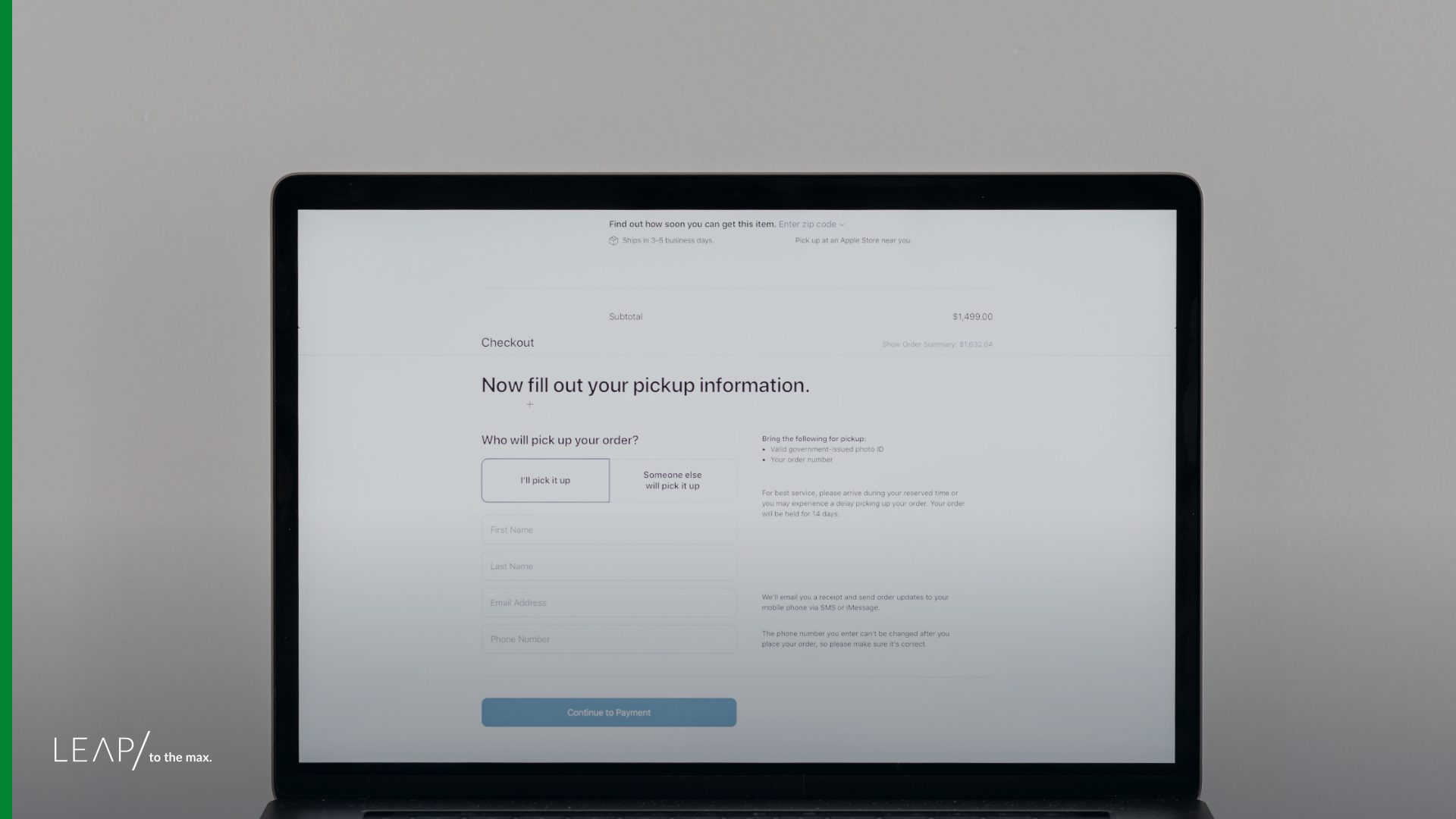
About one in four shoppers abandons their cart due to mandatory account creation. Here is how a guest checkout removes the barrier without losing customer accounts.

Most purchases are abandoned on smartphones. Discover where mobile checkouts fail and the levers you can use to boost your mobile conversion.

Around 7 out of 10 shopping carts are abandoned. Here are the known causes and the levers you can use to specifically lower your abandonment rate.

The cost of conversion optimization depends on a few key factors. Learn about pricing models, cost drivers, and why ROI is the more important figure.

Not every CRO agency tests systematically. These 7 criteria will help you identify reliable providers before you allocate your budget.


.png)