€12.4 million in additional revenue through A/B testing!

Watch for free now
New Study: How AI Search is Changing SEO Visibility in E-Commerce
Read now


A website redesign often sounds like a liberation: new design language, fresh branding, modern technology. But the reality is different. Many redesigns fail because users can no longer find their way around, conversion rates drop and budgets fizzle out. The reason: Companies rely too much on gut instincts and design trends — and forget that the website must do one thing above all else: growth.
1. How to minimize risks with a user-centered redesign and at the same time profit economically
2. When a redesign is unavoidable and when is it better to optimize
3. How to turn your new website into a clear growth lever through analysis and testing
1. How to minimize risks with a user-centered redesign and at the same time profit economically
2. When a redesign is unavoidable and when is it better to optimize
3. How to turn your new website into a clear growth lever through analysis and testing
There are situations in which there is no alternative to a redesign. For example, if your website hasn't been maintained for years, the design is no longer responsive, or the technology is out of date. External factors such as rebranding, opening up new target groups or a technical relaunch can also make the step necessary. In short: If the functional basis is missing, there is nothing more to optimize.
Extreme performance problems are also a clear signal. A loading time of over five seconds or a fragmented user experience not only result in frustrated users, but also in losses in rankings and revenue. Here, only a complete restart provides the necessary lever.
When the base is in place, the radical cut is usually oversized. In such cases, conversion optimization is the smarter choice: Step-by-step adjustments with A/B tests, heat maps, and hypotheses allow you to learn specifically instead of turning everything around at once.
A continuous optimization process makes economic sense, especially if you have enough traffic to achieve valid test results in just a few weeks. This is how you reduce risk and costs: Every change is checked for effect rather than blindly implemented.
This approach — also known as “Evolutionary Site Redesign” — combines stability with progress. Instead of investing high budgets in an uncertain complete project, you are paying off on a continuously increasing conversion rate and thus on your ROI.
Deciding between redesign and optimization is ultimately a question of resources and goals:
For your business, this means making data-based decisions. Check whether your website is generally sustainable. If yes, select Optimization. If not, all that remains is a restart — but always with testing and CRO support so that you protect against the risks.
A redesign without data is a blind flight. To really focus on your users, you first need to understand how they're currently behaving, where they're quitting, and which elements they're actually using. This is the only way to ensure that you don't ignore your actual needs with the new design.
Use a combination of quantitative and qualitative methods:
This data forms the basis for prioritization, which is not based on design preferences, but from business impact.
Prioritize pages and funnels based on business relevance
Not every page is equally important. Focus on the touchpoints that have the biggest impact on sales, leads, or other KPIs. Create a priority list:
This ensures that your resources work first where they have the greatest leverage.
Collaboration of interdisciplinary teams (SEO, CRO, design, IT)
A redesign is not just a design project. It concerns SEO, performance, conversion paths, technology, and branding. Risks can only be minimized and opportunities increased if all disciplines work together early on.
For you, this means: Build in feedback loops right from the start. This is the only way to prevent unpleasant surprises at launch — and ensure that your redesign not only looks nice, but also works economically.
Analyzing your existing website shows you where problems arise — but that Why You can only find out through a direct user survey. User centricity means actively involving your target group in the redesign process. In this way, you can see what expectations exist, which barriers are disruptive and which design or navigation solutions really work.
You won the decisive insights not through endless questionnaires, but through specific questions that give you confidence to act:
With these questions, you can tell at an early stage whether your redesign strikes a chord with users or is at risk of passing them by.
Methods: UX labs, card sorting, semantic differential
There are several proven methods available to generate these insights:
These methods not only provide data, but also concrete starting points for design, navigation and content.
Small samples, big impact
A common misconception: user research is expensive and requires large samples. UX pioneer Jakob Nielsen has been showing for years that just five test subjects are enough to identify around 85% of usability problems. It is not mass that is decisive, but iteration: several small tests that reveal weak points step by step.
Derivation of specific options for action
The results of these surveys and tests are not an end in themselves. They must be translated into clear courses of action:
This turns user feedback into direct input for business results — because it stabilizes your conversion paths and contributes your redesign to measurable goals.
A redesign is not a big bang project, but an iterative process. If you launch everything at once, you risk conversion drops that are barely attributable.
Instead, you rely on a step-by-step introduction: Test new elements or page types in clearly defined sub-steps, accompany each introduction with A/B tests and check the business impact in real time.
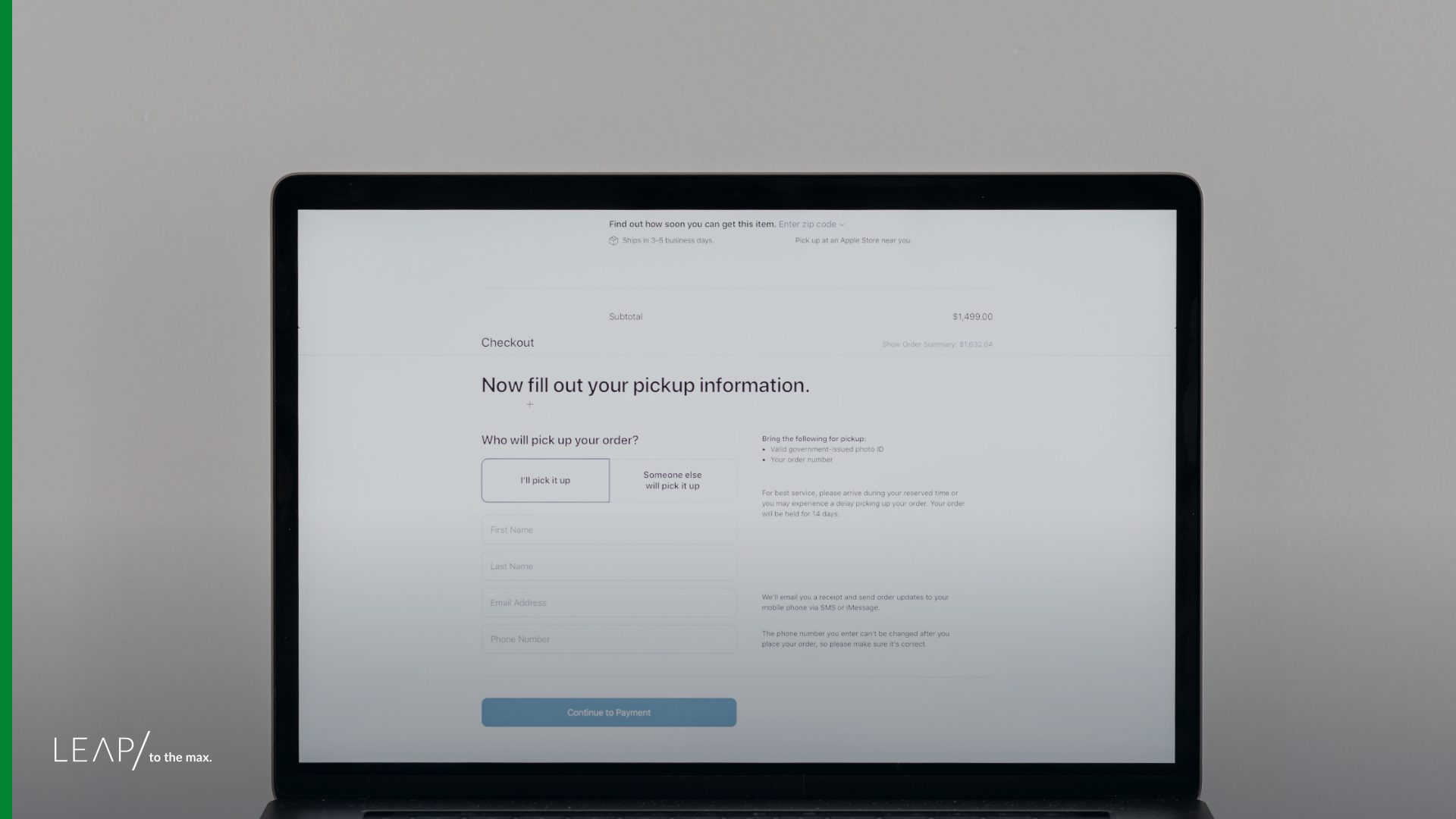
A best practice: Start with the checkout. Here, the design break with the rest of the shop is often low, the function is clear and the business impact is high. When the conversion rate rises, you know that your new design is working — and you can use the learnings for other areas.
A/B tests are your safety net: They not only show whether a change performs better, but also why. With each iteration, you minimize risks and increase the likelihood that your redesign will become a growth factor.
Communication is at least as important as the launch itself. Recurring users react sensitively to changes. Instead of sending them to the new page unprepared, you should make transparent what's changing — and why.
This ensures acceptance, minimizes frustration and strengthens trust in your brand.
In the end, every redesign is a business decision. It's not just about aesthetics, but about growth, profitability, and brand strength.
A new website is not an end in itself. It must stabilize or increase the conversion rate, improve ROI and position your brand in a modern and trustworthy way. Anything else is a waste of resources.
Through user focus, iterative testing, and clear communication, you reduce funnel failures and increase completion rates. At the same time, you strengthen trust in your brand — an intangible but enormously valuable business effect.
Always think of redesign in the context of the entire customer journey: mobile, desktop, stationary. Users jump between devices — your website needs to pick them up everywhere. Those who enable logins, watch lists or seamless transitions retain customers in the long term and increase customer lifetime value.
Artificial intelligence is also changing the way we plan and implement redesigns. What used to require months of analysis and hypothesis work can now be prepared automatically in days.
AI as a driver for personalization and testing
Instead of making static target group assumptions, AI analyses behavioral data in real time. It recognizes patterns in click paths, scroll depths, or breakpoints and shows you which page elements work for which user segments. This gives you the opportunity to specifically develop personalized variants and validate them through A/B tests.
Automated pattern recognition in user behavior
AI models recognize recurring patterns of behavior that human analysts often overlook. Whether it's navigating in the product category, the sequence of interactions, or jumping off at the checkout — machine learning can condense this data and translate it into specific areas of optimization.
Increasing efficiency through smart prioritization
The biggest added value: AI helps you organize the multitude of hypotheses and test the most relevant ones first. Instead of investing resources in random design decisions, use your testing capacity where business impact is most likely. This speeds up the redesign process, reduces incorrect decisions and ensures a better return on investment.
A website redesign is not an end in itself, nor is it a pure design project. It's a strategic lever — but only if it's based on clear data, user feedback, and a clean testing roadmap.
For your decisions, this means:
Takeaway: A redesign can massively accelerate growth and profitability — if it is data-driven, user-centered and implemented with test support. On the other hand, anyone who relies on gut feeling or pure design “beautification” risks conversions and ROI. With the right approach, you can turn redesigns into secure growth projects.

.png)

About one in four shoppers abandons their cart due to mandatory account creation. Here is how a guest checkout removes the barrier without losing customer accounts.

Most purchases are abandoned on smartphones. Discover where mobile checkouts fail and the levers you can use to boost your mobile conversion.

Around 7 out of 10 shopping carts are abandoned. Here are the known causes and the levers you can use to specifically lower your abandonment rate.

The cost of conversion optimization depends on a few key factors. Learn about pricing models, cost drivers, and why ROI is the more important figure.

Not every CRO agency tests systematically. These 7 criteria will help you identify reliable providers before you allocate your budget.


.png)