€12.4 million in additional revenue through A/B testing!

Watch for free now
New Study: How AI Search is Changing SEO Visibility in E-Commerce
Read now


Most decisions on your website aren't made rationally — but on autopilot. People click, scroll, buy, or drop out without thinking twice. This is exactly where a huge lever for your growth lies: If you understand the psychological patterns that drive your users, you can specifically increase your conversion rate.
1. How unconscious decision-making processes influence your conversion
2. How to use psychological principles in practice
3. How AI makes your CRO strategy scalable
1. How unconscious decision-making processes influence your conversion
2. How to use psychological principles in practice
3. How AI makes your CRO strategy scalable
For you as a decision maker, the behavior of users on your website means that psychology is not a “nice-to-have”, but a real ROI driver. With the right methods, you can get your users to their goals faster, reduce wastage in the customer journey and increase revenue per visitor. Conversion optimization thus goes from pure usability fine-tuning to a strategic growth driver.
The classic “homo economicus” — rational, logical, fact-based — is useless for CRO. Neuroscience and behavioral economics clearly show that more than 90% of all decisions are made subconsciously.
Daniel Kahneman described this principle with the two systems of thought:
For your marketing, this means: System 1 dominates. Your website must address unconscious patterns and emotions, not just rational arguments. This is the only way to get users through the funnel reliably.Insight: Over 90% of decisions are made subconsciously — so your conversion optimization must address your users' autopilot, not their “rational mode.”
When decisions are made unconsciously, it is not enough to define your target group based on age, income, or location. Classic demographic segments may provide you with a rough orientation, but they don't explain Why people act differently in identical situations.
Psychological dimensions are more important:
A practical tool for this is the GRIPS® typology, which clusters users according to decision-making behavior — from bargain hunters to habitual buyers. In addition, you can use models such as sine milieus or Hofstede dimensions. It is crucial that you choose a model that fits your business — and enrich it with data from your funnel.
tip: Start with a model like GRIPS®, but don't blindly rely on it. Use your own data (e.g. from A/B testing or behavioral analysis) to continuously validate the psychological patterns of your target group.
Internal linking is more than fine-tuning SEO: It controls how Google and visitors perceive your website. Pages that receive many links are rated as more important by search engines, while visitors are thus intuitively guided to relevant content.
It is important that the architecture is logical and user-friendly:
Three effects that are closely linked and are regularly underestimated in conversion optimization are Zeigarnik effect, who Sunk cost effect and the Endowed-progress effect. All three have one thing in common: They use the human tendency Completing things that have started — and can thus specifically ensure that users last until the end of a customer journey.
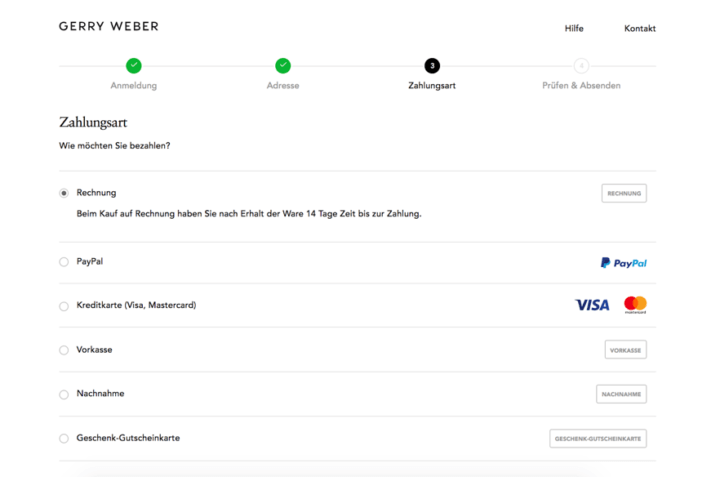
Zeigarnik effect, sunk-cost effect and endowed-progress effect in one go
Zeigarnik effect — the incomplete to-do
People have a strong need to close open tasks. For example, if you display “2 more steps until the purchase is completed” in the checkout, you create exactly this print: The user wants to complete the task. This principle works not only in e-commerce, but also for forms, registrations or onboardings.
Sunk cost effect — investments justify continuation
If users have already invested time, energy, or even money, they are more likely to continue. If you make it clear in the funnel “You've already completed step 1 of 3,” this investment acts as a psychological barrier to abortion. Nobody wants to “give away” their previous efforts.
Endowed progress effect — making progress visible
The effect is even stronger when you progress visualize. A progress bar in the checkout or a points display in a bonus program motivates because users see: “I'm almost there.” This feeling increases stamina — even during longer processes such as surveys or registrations.
Insight: These three effects are particularly valuable when you're in your funnel critical break points has. Through progress indicators, clear status messages and clever advances (e.g. a “starting credit”), you reduce the abandonment rate and increase the proportion of users who actually arrive at their destination — i.e. buy, register or sign the contract.
Business Impact: More completed purchases, fewer drop-offs, higher conversion rate — and that without additional traffic. AI can also help you identify the ideal places in the funnel where these effects have the greatest leverage.
People hate waiting — online even more than offline. The reason: There is often no distraction on the Internet, and just a few seconds seem like an eternity. Long loading times or lack of feedback lead directly to interruptions.
Four reasons why waiting is frustrating:
Practical solutions:
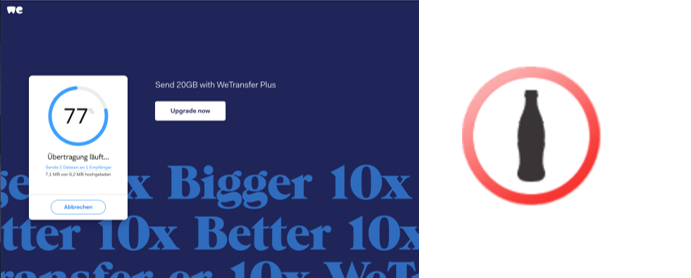
Don't let users fidget, but show the loading progress
Business impact: Checkout and form cancellations are noticeably reduced. A clear charging indicator can make the difference between completing a purchase and jumping off.
Loss outweighs profit. People are more likely to act to avoid a loss than to gain something. This makes urgency a powerful conversion lever.
Two types of urgency:
Practical examples:
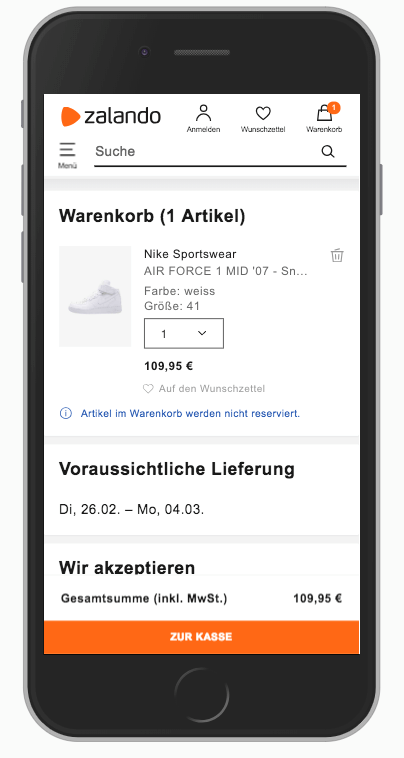
Zalando screenshot
Business Impact: Higher completion rates, fewer “back-to-compare” jumps. But beware: Fake scarcity destroys brand trust and can have legal consequences.
Scarcity increases perceived value. What is rare is automatically considered desirable.
AI boost:
Instead of generic scarcity reports, you can use AI real inventory data live communicate. This makes Scarcity look credible and personalized (“Only 1 piece available in your size”).
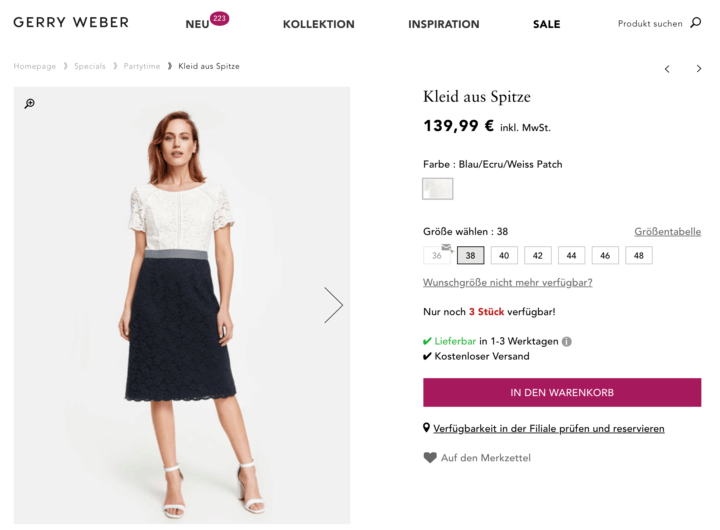
Business impact: Faster buying decisions, higher inventory turnover, increased sales per session.
People trust people — not brands. Positive reviews, testimonials and community signals are therefore strong convincing factors.
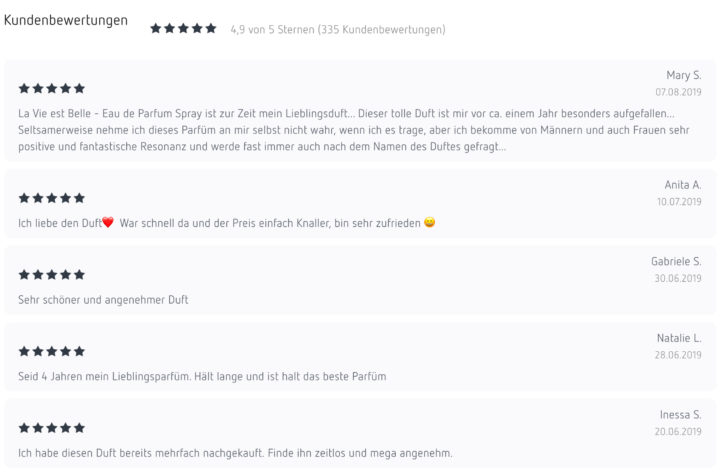
Forms of social proof:
AI boost:
With sentiment analyses, you can see which reviews are converting the most and display them in a targeted manner. Fake reviews can also be identified more quickly with AI tools.
Business impact:
Higher trust, lower bounce rates, better conversion rates — especially for new products or products that require explanation.
Curiosity activates the reward system in the brain. It is a powerful engine for clicks and interactions.
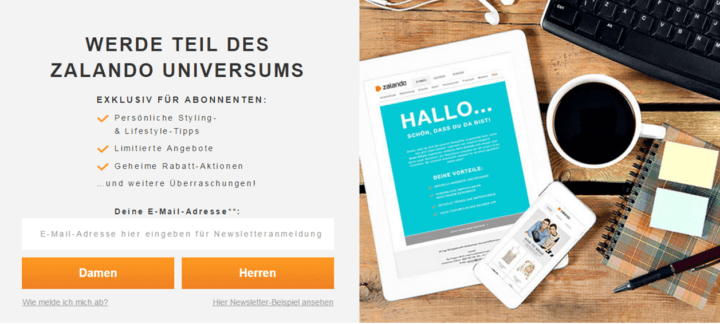
Important:
The expectation must be met. If curiosity is disappointed, the conversion rate falls in the long term.
Business impact:
Higher click-through rates, more registrations and leads, stronger user engagement.
People compare options. When you add a “lock option,” you consciously guide their decision.
A subscription model with three options:
The Decoy option makes premium more attractive without the need to sell it yourself.
Business impact: Higher turnover per customer, better package mix, predictable management of product decisions.
Preferences have tremendous power. Users adopt defaults because it's convenient — even if they had alternatives.
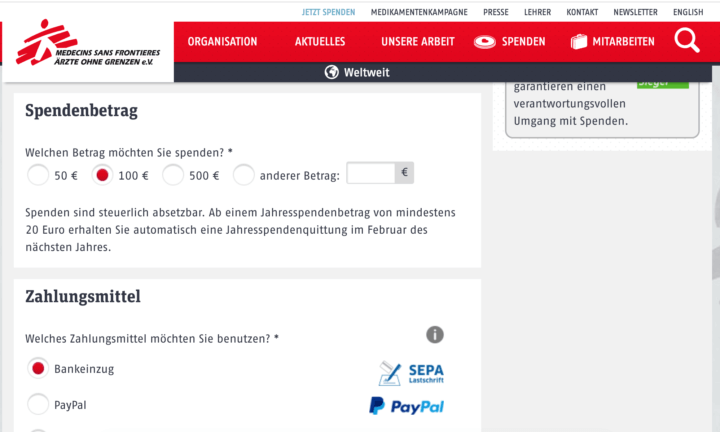
Important rule:
Defaults must be fair and transparent. An opt-in that is difficult to deselect may result in conversions in the short term, but destroys trust.
Business impact: Less friction in the funnel, higher completion rates — especially for forms and recurring processes.
Psychological effects work — but they don't have the same effect on every user. While one person reacts immediately to scarcity, the other is more likely to respond to social proof or curiosity. This is exactly where the strength of artificial intelligence lies: It recognizes patterns that you would not see manually and helps you to trigger psychological triggers targeted and in real time to use.
AI analyses click paths, length of stay, breakpoints or scrolling behavior and identifies Which psychological effects work best on which type of user. Instead of “one size fits all” optimizations, you can personalize conversion triggers.
Predictive A/B testing
Traditional A/B testing costs time and traffic. AI-supported systems recognize more quickly which variant works in which segment. This allows you to iteratively optimize psychological principles and see results in days instead of weeks.
Business Impact
Insight: AI doesn't replace psychology — it makes it scalable. While psychological effects are the basis, AI ensures that you targeted, contextual and profitable can use.
Psychological effects are not a nice addition, but a central lever for your growth. They help you pick up users' natural decision-making behavior — where logic and rationality barely play a role. If you systematically use principles such as Zeigarnik, Scarcity, or Social Proof effects, you reduce abandonment rates and noticeably increase conversions.
In combination with AI, you open up the next level: Instead of standard optimization, you set psychological triggers segment-specific and data-based one. The result is a customer journey that feels intuitive for the user — and becomes profitable for you to plan.
Takeaway
In short: Psychology gives you the mechanisms — AI provides the precision. Together, they give you an advantage over the competition.

.png)

About one in four shoppers abandons their cart due to mandatory account creation. Here is how a guest checkout removes the barrier without losing customer accounts.
Most purchases are abandoned on smartphones. Discover where mobile checkouts fail and the levers you can use to boost your mobile conversion.

Around 7 out of 10 shopping carts are abandoned. Here are the known causes and the levers you can use to specifically lower your abandonment rate.

The cost of conversion optimization depends on a few key factors. Learn about pricing models, cost drivers, and why ROI is the more important figure.

Not every CRO agency tests systematically. These 7 criteria will help you identify reliable providers before you allocate your budget.


.png)