€12.4 million in additional revenue through A/B testing!

Watch for free now
New Study: How AI Search is Changing SEO Visibility in E-Commerce
Read now


Mobile has long been the most important touchpoint in the customer journey — but many companies are not exploiting its conversion potential. Anyone who still treats mobile as a side channel is giving away revenue and brand trust. With the right strategy, you turn mobile users into profitable customers and drive growth across all channels.
1. Why mobile use has its own contexts and shapes buying decisions differently than desktop
2. Which micro-conversions are crucial to increase customer lifetime value and revenue
3. Which measures create trust, reduce abortions and push conversions
4. How AI takes mobile optimization to the next level and gives you a real competitive advantage
1. Why mobile use has its own contexts and shapes buying decisions differently than desktop
2. Which micro-conversions are crucial to increase customer lifetime value and revenue
3. Which measures create trust, reduce abortions and push conversions
4. How AI takes mobile optimization to the next level and gives you a real competitive advantage
Mobile is no longer a sideshow — it is the place where buying decisions are prepared and increasingly completed. With the mobile-first index, Google has made the rules of the game clear: The mobile performance of your website determines your visibility, your reach and, ultimately, your turnover.
But this is exactly where a problem lies for many companies: While traffic has long dominated, conversions on mobile devices are lagging behind. Instead of accepting this gap as “normal,” marketers should see it for what it really is—massive growth and efficiency potential. Anyone who specifically optimizes mobile touchpoints along the customer journey not only increases the conversion rate, but also the return on marketing investment.
The smartphone is the most personal device that we own. It is always at hand, accompanies us in almost every situation in life and is more than just a technical tool — it is an intimate space that combines security, organization and information. This is exactly why users react differently to mobile content than on the desktop.
Anyone who has ever felt the discomfort of someone else holding their own cell phone understands that mobile devices are highly private. Building trust in this sensitive environment is more difficult than on large screens, where there is more space for declarations, seals or comparison tables. On mobile, there is little room left to convince users in seconds — or they jump off.
For your business, this means that mobile conversions depend less on extensive information packages and more on whether you immediately convey relevance and security. Short, clear messages, visible elements of trust and simple actions are decisive here.
Mobile use does not follow a linear pattern, but rather reflects everyday life. To increase conversions, you need to understand in which situations people use their smartphones — and what economic opportunities they offer.
1. Idle time situations
These are moments when people bridge waiting times — on the train, in the waiting room, or between appointments. This is where browsing, inspiration and impulse buying dominate. Studies show: In the morning, users are more likely to consume information-intensive content (e.g. news, continuing education), and in the evening they seek light entertainment and distraction. For you, this means that your mobile content must be simple, snackable and emotionally appealing. If you're convincing here, you'll secure additional sales through spontaneous purchases.
2. Search situations
This involves specific questions: “Where can I find the product? ”, “What does it cost? ”, “How do I get there? “Local searches and price comparisons shape this behavior. Mobile searches often do not lead to online purchases, but directly to stationary retail — a classic media break. This is exactly where there is potential: If you integrate reservation functions, real-time availability or clear pricing arguments, you can turn mobile search into retail sales.
3. Quasi-stationary situations
These are contexts in which users are mobile but can interact in peace — for example on the couch or directly at the point of sale. Deeper information is relevant here: product details, reviews, comparison options. Brands such as AmazonGo or Tesco are already experimenting with hybrid models in which mobile bridges the gap between online information and offline shopping. For you, this means that mobile must not be thought of in isolation. It complements and strengthens desktop and stationary retail.
Mobile devices are the starting point for the majority of purchasing decisions. According to Google, around 70% of all users start their search for information on their smartphones — often in so-called micromoments: brief, spontaneous moments in which a need or problem occurs.
For your marketing, this means that mobile shapes the awareness phase more than any other device. People recognize a problem, look for solutions and evaluate alternatives — all mobile, fast and superficial. If you're not visible or relevant right now, you're losing potential customers before they even enter your customer journey.
The challenge: The small screen leaves little space and the attention span is short. This requires uncompromising prioritization: Which information is really relevant? Which message brings the user to the next action? Anyone who manages to condense mobile content to the decisive points efficiently accompanies the user through the funnel.
The opportunity: Micro-moments are extremely valuable. You decide whether a user will consider you or not. With targeted optimization, you can use these moments to build trust, prepare for conversions, and increase sales potential.
A common mistake in mobile marketing is focusing on immediate sales. Of course, direct purchases are the goal — but conversion values often arise much earlier on mobile devices. Anyone who sees mobile purely as a “transaction channel” overlooks valuable intermediate steps that prepare the purchase and secure customer loyalty in the long term.
These so-called micro-conversions are the actual value drivers. A user who logs in, downloads the app, or maintains a watchlist signals clear interest and commitment — even if they haven't made a purchase yet. It is precisely these actions that significantly increase the probability of a subsequent purchase and increase customer lifetime value.
Examples of relevant micro-conversions:
From an economic point of view, these micro-conversions act like multipliers: They reduce funnel abandonments, increase the repurchase rate and create cross-device bridges. A user who stores mobile products can later complete the purchase in a relaxed manner on the desktop. For you, this means: Miss Mobile not only for revenue per session, but also for its contribution to the entire conversion ecosystem.
Mobile optimization measures
Mobile optimization is not a cosmetic redesign, but strategic conversion work. Whoever wins here combines usability, trust and convenience to create a clear competitive advantage.
Radically simplify content
On small screens, every word counts. Content must be compressed, clearly structured and easy to understand. Use dropdowns, carousels, or accordions to make details available when needed without cluttering the page. Think in terms of “snackable content” — short texts, concise arguments, visually supported.
Make trust visible
On mobile, the barrier to making a purchase is higher because there is no room for explanations. Trust elements are all the more important: well-known payment providers such as PayPal or Klarna, transparent data protection notices, seals and visible service options. Show these elements right near CTAs — where the decision is made.
Emphasize convenience
Each additional click costs you conversions. Offer one-click logins via social accounts, simplified checkouts, and autofill options. The smoother the flow, the higher the completion rate. “One-tap” options that are tailored to the mobile context of use are particularly effective.
Take timing into account
Mobile purchase intentions fluctuate throughout the day. In the morning, searches for information dominate; in the evening, users are more relaxed and open to buying rewards. If you take timing into account, you can deliver messages and CTAs more precisely. Example: Push messages or special evening promotions activate spontaneous purchases.
Differentiate CTAs
Not every user wants to buy right away. Vary your calls-to-action: offer newsletter registrations, app downloads, or direct call options. A call CTA in particular is highly relevant on mobile devices — many users prefer fast connections instead of forms. With intelligent playback, you ensure that your sales team is available when calls come in.
Economic levers through mobile optimization
Investing in mobile optimization is not a cost block, but a lever for growth and profitability.
For decision makers, this means:
Mobile optimization directly contributes to revenue growth, profitability, and brand trust.
Outlook: AI and mobile conversion optimization
The next stage of development is already here: Artificial intelligence makes mobile optimization more dynamic, precise and scalable — always based on proven A/B testing.
The business impact is clear: less wastage, more precise offers and a customer journey that adapts in real time — backed by valid test procedures.
Mobile is not a “side channel,” but the central lever for conversions in a digital world. It shapes the awareness phase, accompanies the search for information and acts as a bridge to desktop and stationary retail.
For your strategy, this means:
Takeaway: Anyone who takes mobile seriously and consistently integrates it into the customer journey not only increases sales in the short term, but also builds profitability and brand trust in the long term. Mobile is not the future — it is already the present of your growth.

.png)

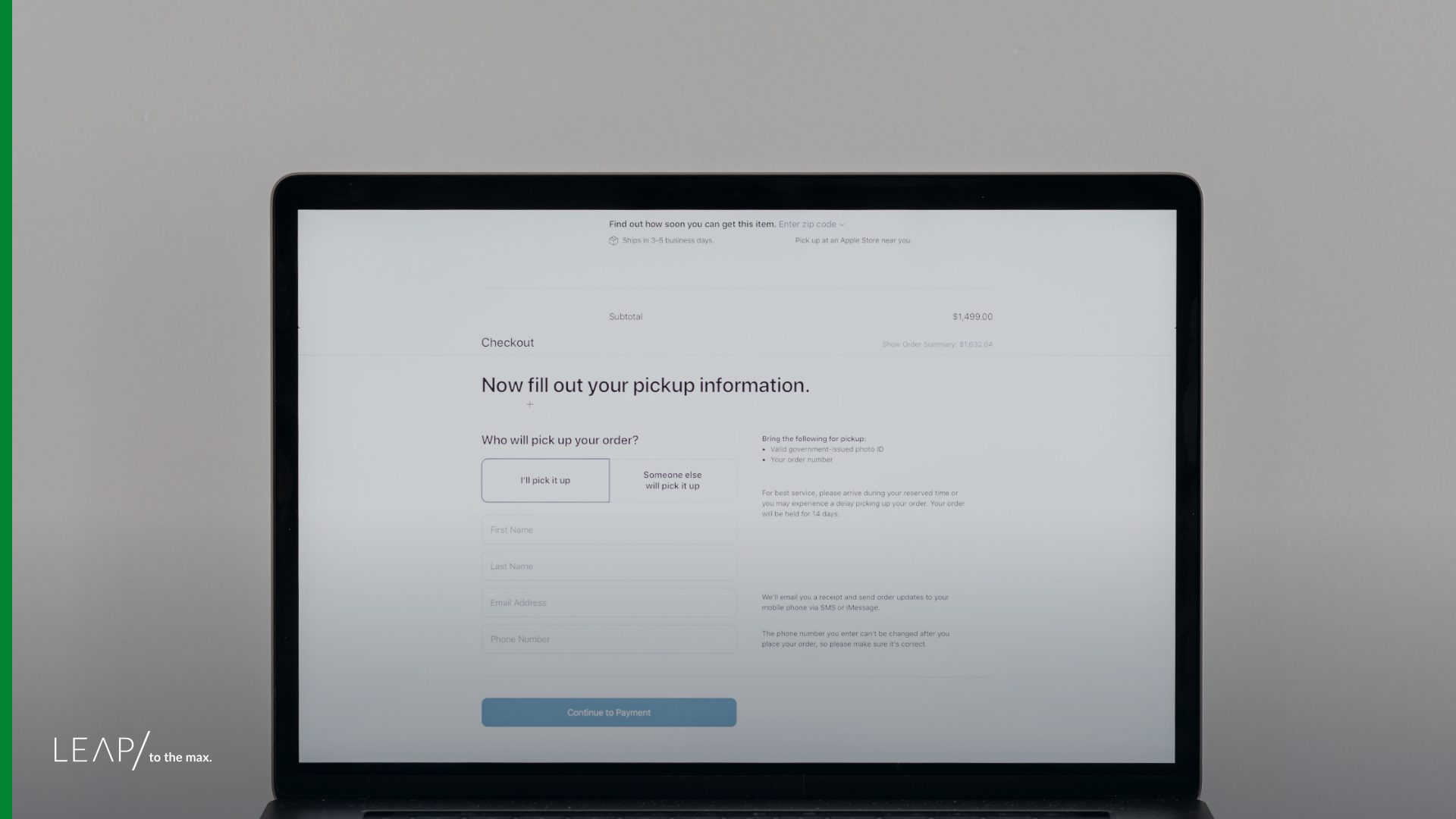
About one in four shoppers abandons their cart due to mandatory account creation. Here is how a guest checkout removes the barrier without losing customer accounts.

Most purchases are abandoned on smartphones. Discover where mobile checkouts fail and the levers you can use to boost your mobile conversion.

Around 7 out of 10 shopping carts are abandoned. Here are the known causes and the levers you can use to specifically lower your abandonment rate.

The cost of conversion optimization depends on a few key factors. Learn about pricing models, cost drivers, and why ROI is the more important figure.

Not every CRO agency tests systematically. These 7 criteria will help you identify reliable providers before you allocate your budget.


.png)