€12.4 million in additional revenue through A/B testing!

Watch for free now
New Study: How AI Search is Changing SEO Visibility in E-Commerce
Read now


A/B testing is the key to sustainable conversion optimization. But not every successful test idea is easy to copy. It is crucial to identify problems cleanly, to derive hypotheses strategically and to use psychological triggers wisely.
1. Why A/B testing has little effect without a strategy
2. Why successful tests are not transferable 1:1 — and how to adapt ideas correctly.
3. Which psychological triggers (loss aversion & endowment effect) measurably increase conversions.
4. Which measures from 1,800 A/B tests work particularly reliably — including best cases from practice.
1. Why A/B testing has little effect without a strategy
2. Why successful tests are not transferable 1:1 — and how to adapt ideas correctly.
3. Which psychological triggers (loss aversion & endowment effect) measurably increase conversions.
4. Which measures from 1,800 A/B tests work particularly reliably — including best cases from practice.
Conversion optimization depends on experimentation. But: A/B testing is not an end in itself.
Anyone who simply “tests straight away” collects data, but rarely usable results.
The difference between successful and unsuccessful A/B tests is almost never in the tested idea itself — but in the strategy behind it. Has a real problem been identified? Is the hypothesis neatly derived? And does the test fit the target group and business model?
That is exactly why test ideas cannot be copied 1:1. What works for one online shop can lead to failure in the next. The good news: With the right roadmap, random test results are transformed into a system that sustainably increases your conversion rate — and at the same time generates valuable knowledge about your customers.
At first glance, it sounds tempting: An A/B test increased the conversion rate at another shop by 20% — so it must work for you too, right? Unfortunately no. The success of a test depends on countless factors.
The most important three:
An example: The well-known “euro sign test.” In restaurants, it is proven that the currency symbol does not work because guests only pay after consumption. In e-commerce, on the other hand, customers pay in advance — and often react with skepticism. So what drives conversions in one setting can increase the abandonment rate in another. Learning: Ideas are inspiration, not abbreviation. Each test must be adapted to your business model, target group, and customer journey.
Conversion optimization doesn't just work through design or technology. The psychological patterns that are deeply rooted in our behavior have the strongest effect. You should definitely know two of them in e-commerce: loss aversion and endowment effect.
Loss aversion:
People are more sensitive to losses than to gains. A missed discount or a sold-out product hurts more than the joy of a small bonus. That's exactly why notes like “Only a few pieces still available” work so well — But onlyif they're truthful. Artificial scarcity not only leads to frustration, but can also have legal consequences.
Endowment effect:
As soon as users perceive something as “their property,” the perceived value increases. Even small language adjustments such as “My shopping cart” instead of “shopping cart” or temporary reservations during checkout reinforce this feeling. The result: fewer cancellations, higher closing rates, more repurchases.
How you can use the effects seriously
Even though there are no magic bullet points, we have identified patterns from over 1,800 A/B tests: Some measures consistently deliver better results in a wide variety of shops.
A classic: Button design and wording
Many buttons disappear in the flat design and are overlooked. Even small adjustments — shadows, high-contrast colors, consistent design — can significantly increase the click rate. The wording is just as important: “Learn more” has a completely different effect on an affiliate page than “buy now.”
Why does that (almost) always work? Because it addresses a universal problem: Users don't immediately recognize clickable elements or don't feel picked up by the wrong choice of words. Buttons are core points of interaction — and their optimization potential is often underestimated.
The learning: Test where users need to take action. In particular, seemingly banal elements such as buttons or forms have a disproportionate influence on the conversion rate.
Our most exciting learnings often arise where the user path is particularly complex. Two examples show how strongly the right design influences conversion:
Best case 1: Chatbot instead of form
Long lead routes are a conversion killer — many users drop out when they feel they're interacting with a machine. A test in which a chatbot took over the query as a “personal assistant” was more successful. Users received direct feedback on their input and benefits were incorporated step by step in the interaction. Users also reacted positively to the fact that the chatbot had its own personality.
Result: The lead completion rate rose significantly. The dialogue character was motivating — a form became an interaction.
Best case 2: Start personalizing according to intention
Another bottleneck: Users with completely different intentions end up on the same page. New customers need trust, regular customers want information about the product or service.
A/B tests were used to test entry-level variants — for example with a stronger focus on trust signals for first-time buyers and clear communication of benefits for returning customers.
The result: Higher conversion rates because every user saw more relevant content.
Both cases show: It is worthwhile to make the user path more human and differentiated.
Strategic A/B testing is more than just experimenting. Those who derive hypotheses cleanly, integrate psychological patterns in a targeted manner and consistently test user paths achieve measurable effects: higher conversion rates, more leads, more turnover.
The examples show:
The result: big effects are created from small adjustments. Every percentage point gained in the conversion rate has a direct impact on sales and profit. Anyone who uses A/B testing strategically not only builds up knowledge about their customers, but also creates a lasting competitive advantage.

.png)

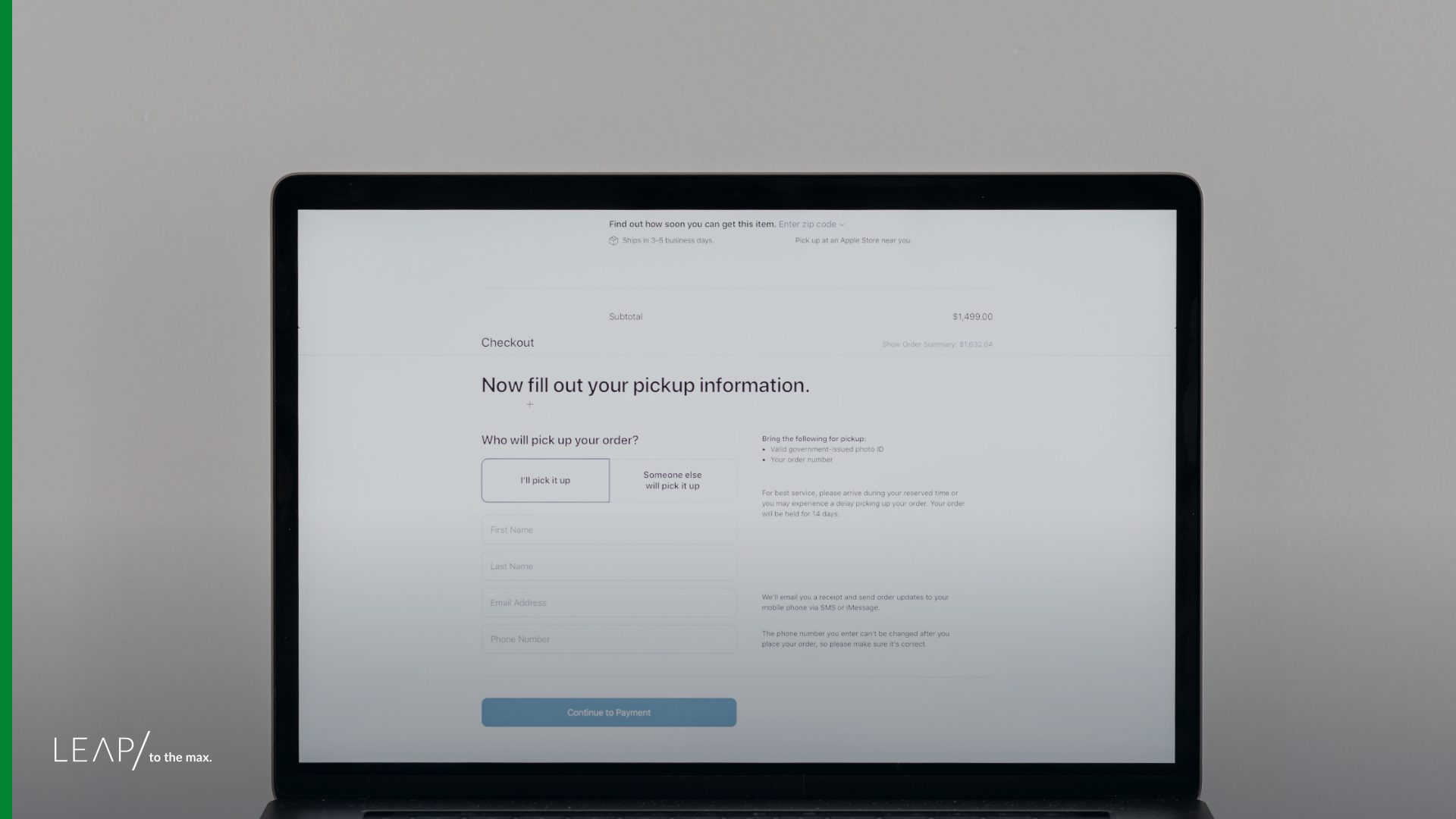
About one in four shoppers abandons their cart due to mandatory account creation. Here is how a guest checkout removes the barrier without losing customer accounts.

Most purchases are abandoned on smartphones. Discover where mobile checkouts fail and the levers you can use to boost your mobile conversion.

Around 7 out of 10 shopping carts are abandoned. Here are the known causes and the levers you can use to specifically lower your abandonment rate.

The cost of conversion optimization depends on a few key factors. Learn about pricing models, cost drivers, and why ROI is the more important figure.

Not every CRO agency tests systematically. These 7 criteria will help you identify reliable providers before you allocate your budget.


.png)