€12.4 million in additional revenue through A/B testing!

Watch for free now
New Study: How AI Search is Changing SEO Visibility in E-Commerce
Read now


In an online shop, even small changes can have a big impact. But it is not always possible to tell at first glance which measures actually increase the conversion rate. That's where A/B testing comes in: It provides data-based insights into which variants of your website work best. Especially for shops with high traffic, this can make the difference between a successful sale and a missed customer.
1. Why A/B testing is so relevant today
2. What are the benefits of A/B testing for website operators
3. Which areas of your shop are easy to test.
4. How you plan and evaluate tests
5. Which best practices have been established
6. How A/B testing increases conversion and revenue in the long term — and what role GDPR & accessibility play in this.
1. Why A/B testing is so relevant today
2. What are the benefits of A/B testing for website operators
3. Which areas of your shop are easy to test.
4. How you plan and evaluate tests
5. Which best practices have been established
6. How A/B testing increases conversion and revenue in the long term — and what role GDPR & accessibility play in this.
Many companies know about the benefits of A/B testing, but are not yet using them consistently. This is often due to a lack of resources or lack of prioritization. Yet they're one of the few data-based methods you can use to ensure that changes to your website really have a positive effect — rather than just based on assumptions.
The digital landscape is changing faster than ever: increasing user expectations, more complex customer journeys and ever more intense competition make optimization a continuous process. Simply making changes “based on gut feeling” is no longer enough.
A/B testing is particularly relevant through the use of AI. Algorithms help you identify patterns in user behavior, prioritize hypotheses and run tests in a more targeted manner. This allows you to find out more quickly which measures have the biggest business impact. In an environment where small details determine success or failure, A/B testing is therefore a key tool for competitiveness.
A/B tests provide statistically verified results that not only record the conversion rate, but also metrics such as click goals, bounce rate or revisit rate. In this way, weak points can be identified and optimized in a targeted manner. Another advantage is segmentation: Differences between target groups, devices or countries are visible, which makes personalized adjustments possible.
AI can provide useful support here: Automated analyses can evaluate large amounts of data from A/B tests more quickly, recognize patterns and make suggestions for promising test variants. This makes hypothesis generation more efficient and test cycles can be carried out in a more targeted manner.
For corporations and large medium-sized companies, a healthy link profile is not a nice-to-have, but a central growth driver: A/B tests are suitable for many areas of your shop. Cross-page elements such as navigation, headers, footers or color design are particularly easy to test. The homepage also offers potential: “Reason Why” arguments, images in First View or visual cues such as gaze-cueing can vary and be tested for their effect.
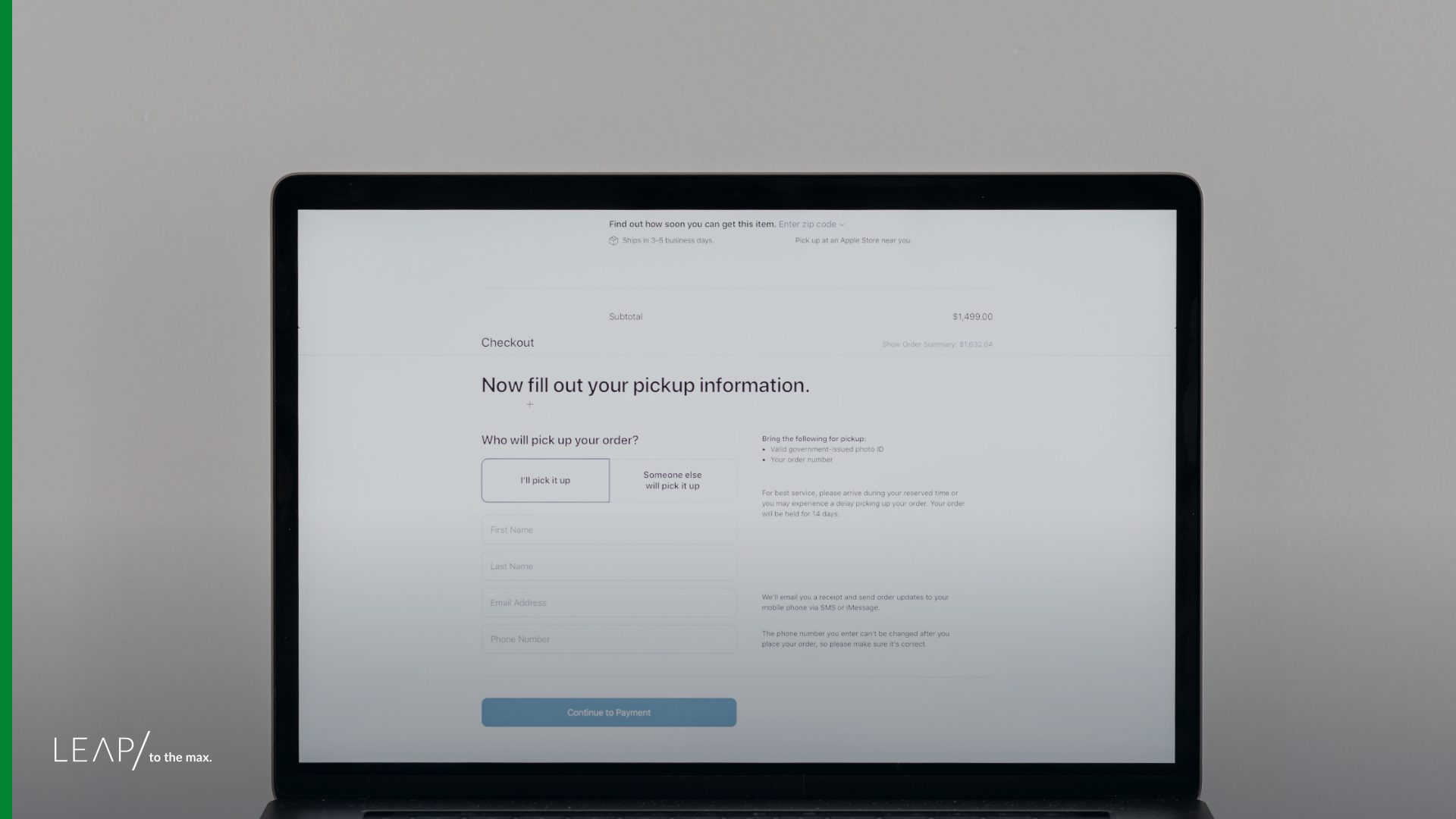
Category pages benefit from tests for filter placement, product sorting, or the presentation of sub-categories. On product detail pages, image carousels, CTA buttons, recommendation boxes and product descriptions can be optimized. Even at checkout, tests make sense: CTA, voucher code fields, trust signals and forms can noticeably influence the conversion.
AI can also help here: It recognizes hotspots, identifies which elements users pay particular attention to, and prioritizes test ideas according to their expected impact on conversion.
In order to successfully carry out A/B tests, a structured approach is crucial. First, you should hypothesize: Which elements could improve the conversion rate and why? You then define test variants that test these hypotheses. The tests are then ideally run simultaneously on different user segments so that the results are statistically reliable.
Analyzing test results is a key step. This is not only about comparing the conversion rate, but also about secondary KPIs such as click behavior, bounce rates or length of stay. AI can help to automatically evaluate large amounts of test results, recognize patterns and make predictions for new test variants. This makes it possible to make decisions more quickly and increase the efficiency of test cycles.
An effective A/B test is characterized by clear goals, realistic hypotheses, and defined metrics. Test variants should only be changed at one factor at a time in order to be able to draw clear conclusions. In more extensive tests, several variations can also be tested at the same time, eliminating weakly performing variants at an early stage.
AI-powered tools can help here by providing suggestions for variations based on historical data, thus increasing the likelihood that tests will deliver significant results. In addition, tests can be controlled dynamically: Low-performing variants can be automatically reduced, while the promising variants receive more traffic.
In addition to conversion optimization and increased sales, there are other factors that are decisive for the success of companies: legal compliance and user-friendliness.
GDPR: Transparent cookie banners, consent management and data protection notices directly influence whether users consent or opt out. With A/B testing, you can find out which variants are legally clean — and create less friction at the same time. Even small adjustments in language, design, or placement determine whether your approval rating rises or falls.
accessibility: With the Accessibility Strengthening Act (BFSG), digital accessibility will become mandatory from 2025. A/B testing helps you check which adjustments actually improve usability for people with disabilities — whether it's navigation, color contrasts, forms, or screen reader compatibility. This not only ensures compliance, but also opens up new target groups.
Accessibility and data protection are not only regulatory issues, but also have a direct impact on trust, brand value and thus also on sales. A/B testing is key to finding out how to meet these requirements without sacrificing conversions.
A/B testing is not a one-time project, but a continuous process. Even if the conversion rate is already high, further optimization potential can be exploited through small adjustments. Regular tests ensure better user experiences and higher sales in the long term.
AI can significantly facilitate continuous optimization: It recognizes trends in user behavior, suggests new test ideas and evaluates the potential impact of various adjustments. In this way, shops can be constantly improved without the hassle of manual analyses getting out of hand.
A/B testing is an indispensable tool for online shops to systematically increase conversion rates, improve user experiences and comply with legal requirements. They help you test hypotheses, uncover weaknesses and make data-based decisions. A structured testing process is particularly effective, in which every change is checked for its effect — from product presentations to checkout flows to consent banners and barrier-free design elements.
AI amplifies this effect by identifying patterns in large amounts of data, prioritizing tests, and providing suggestions for optimization. Anyone who consistently uses A/B testing not only ensures more conversions and sales, but also long-term competitiveness in a market where usability, trust and compliance are decisive for success.

.png)

About one in four shoppers abandons their cart due to mandatory account creation. Here is how a guest checkout removes the barrier without losing customer accounts.

Most purchases are abandoned on smartphones. Discover where mobile checkouts fail and the levers you can use to boost your mobile conversion.

Around 7 out of 10 shopping carts are abandoned. Here are the known causes and the levers you can use to specifically lower your abandonment rate.

The cost of conversion optimization depends on a few key factors. Learn about pricing models, cost drivers, and why ROI is the more important figure.

Not every CRO agency tests systematically. These 7 criteria will help you identify reliable providers before you allocate your budget.


.png)