€12.4 million in additional revenue through A/B testing!

Watch for free now
New Study: How AI Search is Changing SEO Visibility in E-Commerce
Read now


Many companies invest heavily in A/B testing — and wonder why the results have little effect on sales or profitability. The reason: missing or incorrect goal definitions. In this article, you'll learn how to set up your tests so that they deliver real business impact.
1. Why clear goal definition is the key to successful A/B testing
2. What role primary and secondary goals really play — and where the pitfalls lie
3. Why turnover as a KPI is deceptive and which alternatives enable you to make better decisions
4. How to manage sustainable growth with a clean goal hierarchy
1. Why clear goal definition is the key to successful A/B testing
2. What role primary and secondary goals really play — and where the pitfalls lie
3. Why turnover as a KPI is deceptive and which alternatives enable you to make better decisions
4. How to manage sustainable growth with a clean goal hierarchy
A/B testing isn't just a conversion tool — it's a tool for managing your growth. But without a precise definition of goals, it remains worthless. If it is unclear which success should be measured, you risk investing time and resources in tests that have no lasting impact on business success. An example: If you only optimize for clicks, the interaction rate may increase in the short term. But if these clicks don't lead to purchases or leads, there is no measurable business impact. Clear, verifiable goals ensure that your testing initiatives don't get stuck in operational details, but directly contribute to revenue growth, profitability, and market share.
In conversion optimization, there are two types of goals that you should always keep in mind:
For you, this means: Primary goals are the basis for decision-making, secondary goals provide insights. If you only bet on one target type, you risk a distorted image — and thus wrong decisions.
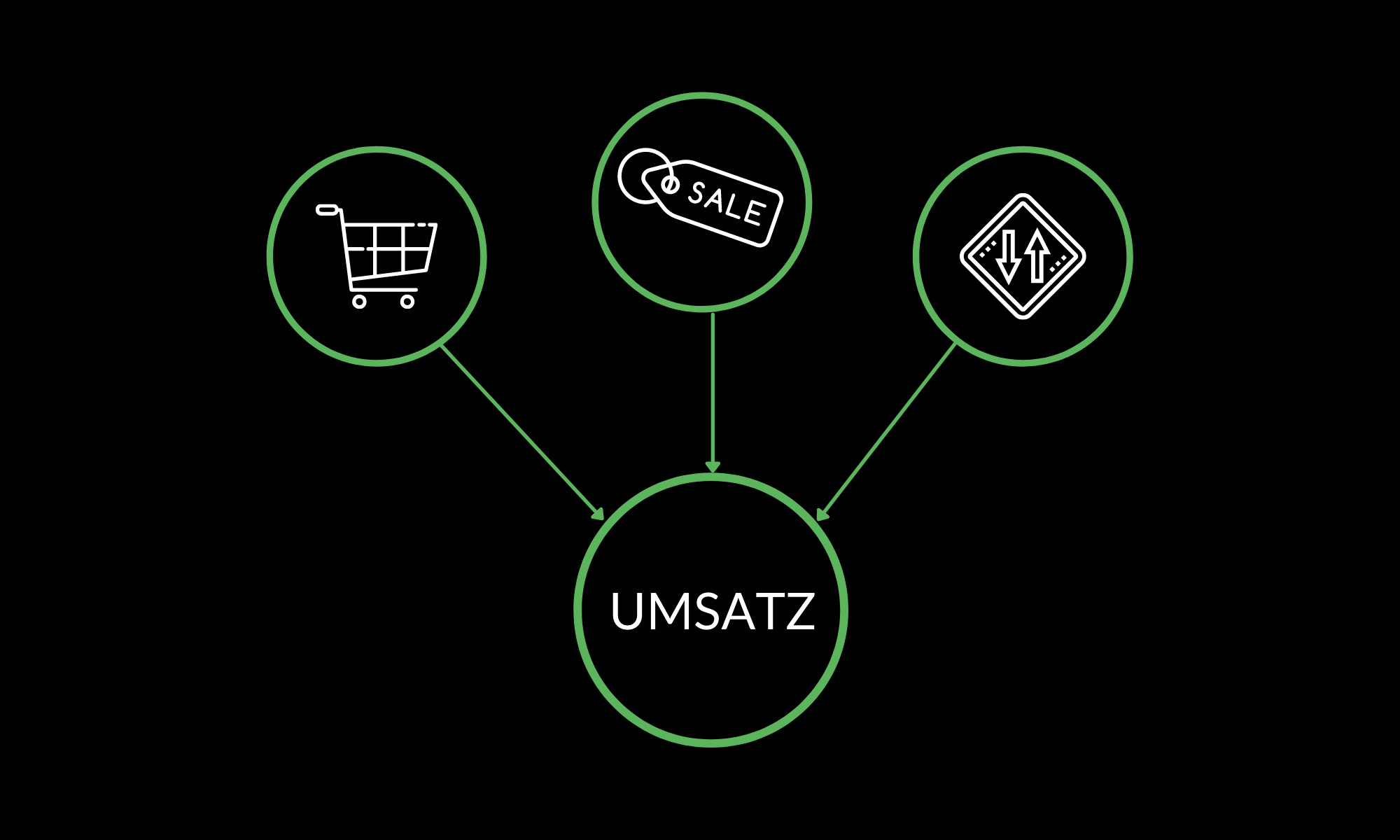
Not only primary goals such as sales themselves play a role
One of the most common mistakes in management: Defining revenue as the main KPI. Sounds logical — but it's dangerous. Sales are volatile and depend on too many external factors: Seasonal effects, major customers or a changed traffic mix can massively distort results.
Even more critical: Sales as a key metric can steer you in the wrong direction. A test that brings in more revenue in the short term can worsen the conversion rate or increase customer acquisition costs in the long term.
The right approach: View sales as an accompanying indicator, not as a main indicator. The focus is on conversions, registrations or subscriptions — where the cause-effect relationship is clear. This ensures that A/B testing is the basis for sustainable and scalable growth decisions.
It is tempting to reduce success to a single key figure — “The main thing is that the conversion increases.” But this view is dangerous. It ignores the fact that the effect of tests is always multi-dimensional.
An example: Your test increases registrations (primary goal), but at the same time decreases the average shopping cart value. Result: Although you gain more users, you lose revenue per transaction.
If you align strategy and resources with just one goal, you risk cannibalization effects between KPIs. A positive development in the short term can jeopardize your profitability in the medium term.
The solution: Build a goal hierarchy. Primary goals provide direction, secondary goals provide depth. Only when you think both things together can you tell whether a test brings real business value or only looks good on the surface.
Many companies use turnover as a main indicator. At first glance, this makes sense — sales are familiar, universal and easy to measure. That is exactly what makes him dangerous: He is a sham success that often conceals more than reveals. Why
The better solution: Align primary goals with clear cause-and-effect relationships — such as completed orders, recurring purchases, or subscriptions. Turnover is included as a control variable, but never as the sole basis for decision-making. This ensures that your tests reveal real levers for growth and profitability — rather than just short-term illusions of success.
A/B testing is not an end in itself — and certainly not a game with numbers. When you reduce your tests to clicks or revenue, you're wasting potential and even risking bad decisions. Only clear, multi-dimensional goals make your experiments a real control tool for growth.
Primary goals, such as orders or registrations, give you the basis for making tough decisions. Secondary goals provide an understanding of user behavior and show where you need to readjust. You should never use turnover as the sole measure of success — it is a control variable, not a driver.
The quintessence: Only when you build up a clean goal hierarchy can you recognize which tests really create value. In this way, you ensure that your A/B tests not only produce short-term swings, but also enable sustainable decisions — for profitable growth that pays off.

.png)


About one in four shoppers abandons their cart due to mandatory account creation. Here is how a guest checkout removes the barrier without losing customer accounts.

Most purchases are abandoned on smartphones. Discover where mobile checkouts fail and the levers you can use to boost your mobile conversion.

Around 7 out of 10 shopping carts are abandoned. Here are the known causes and the levers you can use to specifically lower your abandonment rate.

The cost of conversion optimization depends on a few key factors. Learn about pricing models, cost drivers, and why ROI is the more important figure.

Not every CRO agency tests systematically. These 7 criteria will help you identify reliable providers before you allocate your budget.


.png)