€12.4 million in additional revenue through A/B testing!

Watch for free now
New Study: How AI Search is Changing SEO Visibility in E-Commerce
Read now


A/B testing is one of the most effective levers to systematically increase your conversion rate and uncover sales potential. When implemented correctly, it provides you with reliable answers: Which version of your website brings more leads, more sales, more profit? But this is exactly where the danger lurks. If you make mistakes, testing becomes expensive mistakes—your conversion rates fall, budgets fizzle out, and you make decisions that slow down your growth.
1. The five typical mistakes that make A/B testing unreliable—and how to avoid them
2. How to ensure valid results with hypotheses, segmentation and clean samples.
3. Why error-free testing not only protects conversions, but also increases ROI and growth
1. The five typical mistakes that make A/B testing unreliable—and how to avoid them
2. How to ensure valid results with hypotheses, segmentation and clean samples.
3. Why error-free testing not only protects conversions, but also increases ROI and growth
You’ve launched your test, the first data is trickling in, and the variation is in the lead. There’s a 75% probability that the new page performs better. Sounds like a clear signal? Wrong. This is exactly where many marketers stumble: they interpret results as the truth far too soon.
The problem: A significance level of 75% means that in one out of four cases, your variation will not perform better than the original. If you roll it out anyway, you risk permanently losing revenue and conversion rates. For commercial success, it is crucial to be patient and wait for reliable results.
The rule of thumb: Set a benchmark of at least 90%, or better yet, 95% significance. Only then can you assume that the result is stable and will hold up in the future. Also, always let your tests run long enough to cover all relevant cycles—weekends, weekdays, and various traffic peaks.
Business Impact: Treating results as valid too early wastes budget, jeopardizes your conversion rate, and risks poor decisions that undermine confidence in testing. Conversely, those who demonstrate patience and wait for valid data secure sustainable insights—and ensure every optimization translates into real ROI.
One of the most common and dangerous mistakes in A/B testing is making decisions based on a data set that is far too small. Just because the first 20 visitors show a clear trend doesn't mean this behavior applies to your entire target audience.
A small sample size distorts your results—you identify patterns that are actually just coincidences. This leads to false positives (a supposed winner that isn't one in reality) or false negatives (you miss out on a variation that actually works better). In both cases, you waste resources and risk breaking funnels that were already working.
Particularly tricky: Many testing tools suggest a "winner" early on as soon as a difference emerges. If you accept this recommendation without verification, you can easily be led astray.
How to do it better:
Business Impact: A sample size that is too small can cost you dearly. If you prematurely roll out a weaker variation, it costs you not only conversions but also trust in the process. With a solid data foundation, however, you ensure that every optimization is reliable—and truly creates value for your business.
Many tests fail not because of the idea, but because of a lack of structure. Without clear hypotheses, target metrics, and ground rules, you’re just shooting in the dark—producing data you can’t interpret reliably. The result: nice-looking reports, but little impact.
An A/B test without a plan yields random findings. You won’t know why a variant works, whether the effect is robust, or if you’re just measuring noise. Even worse: you roll out changes that don’t fit your funnel or brand—and introduce side effects (e.g., more clicks, but lower revenue per session). Planning is therefore not just a formality, but risk management for conversion and ROI.
Every test needs a precise, verifiable hypothesis—derived from analysis and user insights, not gut feeling. This format has proven effective:
IF [specific change], THEN [expected effect on primary goal], BECAUSE [justification via heuristic/insight/data signal].
Example: IF we make the CTA in the cart sticky and display the total costs transparently, THEN the checkout start rate will increase, BECAUSE decision friction is reduced and price uncertainty is eliminated.
This includes a measurement plan:
Define significance level (typically 95%), statistical power (e.g., 80%), expected effect and required sample size . This prevents underpowered tests and premature decisions.
Always place A/B tests within the overall context of the website and business goals
A test is never isolated: it must align with your brand image, pricing strategy, and the rest of the funnel. Therefore, plan in advance:
This is how you ensure that a local uplift serves global business goals – and that learnings remain reusable.
Pro tip
Use a concise test briefing (1 page) for every test: problem & insight, hypothesis (IF-THEN-BECAUSE), variant description, measurement plan (primary/secondary/guardrails), sample size & duration, risks/dependencies, QA checklist, and rollout criteria. This document keeps the team disciplined – and saves you from expensive discussions later on.
Many A/B tests deliver "average" results – and that is exactly the problem. If you treat all users the same, you overlook valuable differences between segments. What looks neutral in the overall picture can be a clear win or a significant loss for individual target groups.
Suppose your variation increases the overall conversion rate by 0.5%. That sounds marginal. But in a detailed analysis, you discover: the uplift on mobile is +8%, while it is –3% on desktop. Without segmentation, you would never have recognized this effect – and might have globally rolled out a change that is harmful to half of your users.
Segmentation is therefore not a "nice to have," but absolutely essential for interpreting results correctly and not missing out on growth opportunities.
Which segments you look at depends on your business model. These dimensions very often provide valuable insights:
The more granular your testing, the more likely you are to discover patterns that disappear in the averages.
The economic benefits of segmentation
Segmented results act as a double lever:
Example: If you know that a variation performs particularly well for new mobile customers with large shopping carts, you can tailor campaigns, personalization, and features specifically to them.
How to implement segmentation in practice
Tip
Start with 2–3 core segments that are most relevant to your business (e.g., mobile vs. desktop, new vs. returning customers). Expand your segmentation step-by-step as your data foundation grows.
An A/B test never happens in a vacuum. User behavior is shaped by external influences—from seasons and days of the week to major events. If you don't account for these factors, you risk skewed results and making decisions that won't hold up in everyday operations.
Imagine you are testing a new checkout variant—and you launch the test right in the middle of the holiday shopping season. Suddenly, conversions skyrocket. Is it the new design? Maybe. It is more likely that the season's increased willingness to buy is masking the actual effect. As soon as things return to normal, performance drops—and you have made the wrong decision.
You should keep these factors in mind for every test:
How to get a handle on external factors
Business impact: Avoiding costs, securing ROI
External factors can make the difference between a real winner and an expensive bad decision. If you ignore them, you risk:
Conversely, systematically accounting for external influences increases test reliability—and ensures that every optimization truly contributes to sustainable growth.
There is a sixth mistake that this article doesn't cover: not testing at all. In our analysis of 2,496 of the largest German online shops, 76 percent operate without an A/B testing tool. Three out of four are therefore foregoing the only growth lever that works independently of Google, in the very year that organic visibility has fallen by a median of 16.7 percent. The five mistakes above cost you individual percentage points. Not testing at all costs you the entire discipline.
The figures for this can be found in our 2026 Study on AI and SEO in E-Commerce.
A/B testing is not an experimental playground for quick design tweaks, but a strategic tool for increasing revenue. However, the five classic mistakes—celebrating results prematurely, using samples that are too small, testing without hypotheses, forgetting segmentation, or ignoring external factors—not only lead to wrong decisions but also cost real money.
For your business, this means: each of these mistakes reduces the reliability of your tests, jeopardizes conversions, and can steer budgets in the wrong direction. Those who instead wait for valid sample sizes, clearly define hypotheses, differentiate between user segments, and account for external influences secure the foundation for sustainable optimization.
The result:
Takeaway:
Avoid these typical mistakes, and A/B testing will become a growth lever. It protects you from expensive errors and turns optimization into an investment with a clear return—for more revenue, profitability, and long-term competitiveness.

.png)

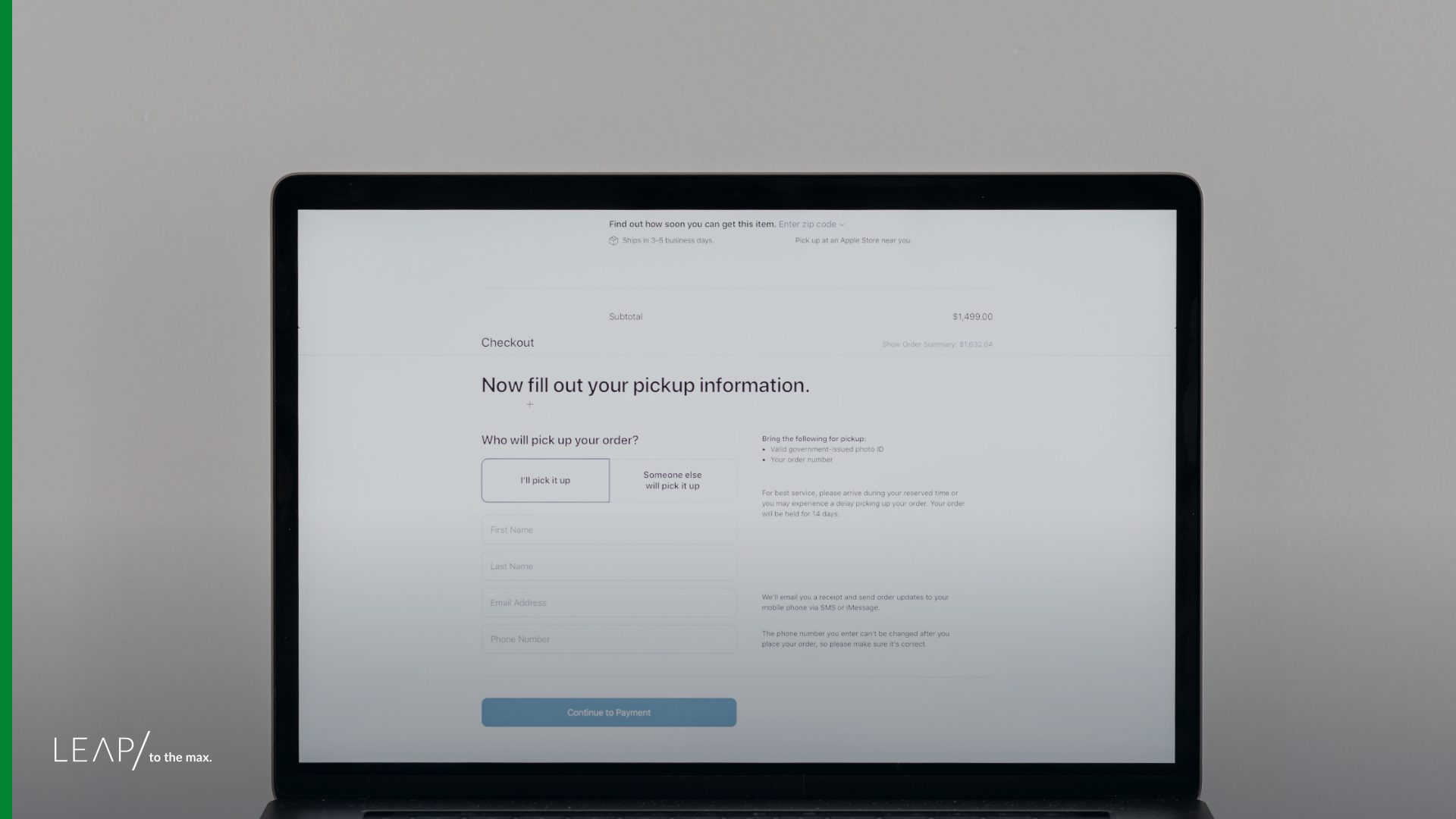
About one in four shoppers abandons their cart due to mandatory account creation. Here is how a guest checkout removes the barrier without losing customer accounts.

Most purchases are abandoned on smartphones. Discover where mobile checkouts fail and the levers you can use to boost your mobile conversion.

Around 7 out of 10 shopping carts are abandoned. Here are the known causes and the levers you can use to specifically lower your abandonment rate.

The cost of conversion optimization depends on a few key factors. Learn about pricing models, cost drivers, and why ROI is the more important figure.

Not every CRO agency tests systematically. These 7 criteria will help you identify reliable providers before you allocate your budget.


.png)