€12.4 million in additional revenue through A/B testing!

Watch for free now
New Study: How AI Search is Changing SEO Visibility in E-Commerce
Read now


Neuromarketing has developed significantly since its inception and has become firmly relevant in e-commerce. Understanding how the brain makes buying decisions not only optimizes campaigns, but also conversions, pricing, and brand trust. Decision-makers gain an advantage as a result — because they manage marketing budgets not based on gut feeling, but on measurable responses.
1. Which methods are relevant in practice today — and which you can safely forget.
2. How companies use neuromarketing to measurably increase ROI and customer access.
3. Why the combination of neuroscience, behavioral economics and AI represents the next level in marketing.
1. Which methods are relevant in practice today — and which you can safely forget.
2. How companies use neuromarketing to measurably increase ROI and customer access.
3. Why the combination of neuroscience, behavioral economics and AI represents the next level in marketing.
When the term “neuromarketing” first appeared around 15 years ago, many immediately thought of colorful fMRI images from the laboratory. Back then, it seemed like an experimental field of research, far removed from day-to-day business. Today, the picture has completely changed. Neuromarketing is no longer an academic toy, but a strategic tool for companies that want to systematically build up competitive advantages.
In essence, neuromarketing today means using the interface between neuroscience, psychology, behavioral economics and data analysis to base marketing decisions no longer on gut feeling, but on measurable, neurologically based responses. It is about understanding how the brain prepares buying decisions, how emotions control attention and how cognitive processes ultimately decide whether to convert or cancel.
The development is particularly evident in three areas:
Neuromarketing tools have evolved massively. Decision-makers should be aware of these developments in order to make the right investments:
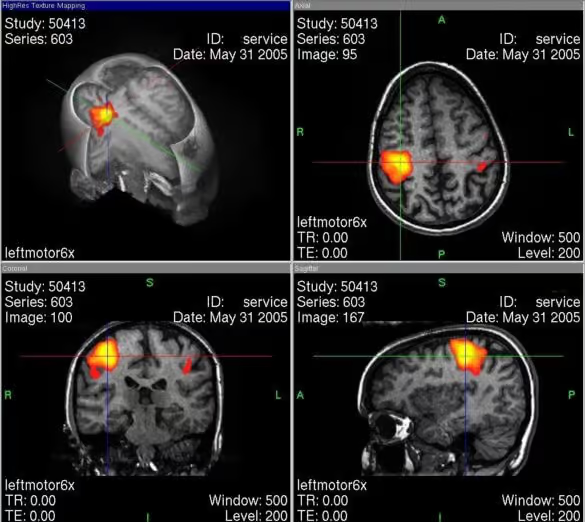
fMRI in action
Neuromarketing is not an end in itself — it is used where it directly influences ROI. Typical fields of application are:
Each of these approaches aims to make marketing decisions measurable — and no longer rely on gut feeling.
Cognitive distortions such as the framing effect have long been classics in marketing. But by 2025, they will move more into the digital context.

Even the classic case: “half empty or half full” is a type of framing
Anyone who uses framing systematically not only optimizes the conversion rate, but also strengthens customer lifetime value in the long term.
Neuromarketing promises a lot — and delivers when used correctly. At the same time, decision makers should know the limits.
Opportunities:
Limits:
The key is to use neuromarketing responsibly — as an optimization aid, not as a hidden influence.
Neuromarketing has developed from an academic niche field to a practical business tool. What was previously researched in the laboratory can now be used directly in everyday market life thanks to AI, wearables and biometric processes — from pricing to optimization of the checkout process.
For decision makers, this means that anyone who understands the mechanisms of the brain can use marketing budgets more precisely, systematically increase conversion rates and develop products that create real customer access. At the same time, it remains crucial to keep an eye on the limits — both methodically and ethically.
The future does not lie in “colorful brain scans,” but in combining neuroscience, behavioral economics and AI. Companies that use this triad secure a decisive advantage: more efficiency, more trust, more turnover.

.png)


About one in four shoppers abandons their cart due to mandatory account creation. Here is how a guest checkout removes the barrier without losing customer accounts.

Most purchases are abandoned on smartphones. Discover where mobile checkouts fail and the levers you can use to boost your mobile conversion.

Around 7 out of 10 shopping carts are abandoned. Here are the known causes and the levers you can use to specifically lower your abandonment rate.

The cost of conversion optimization depends on a few key factors. Learn about pricing models, cost drivers, and why ROI is the more important figure.

Not every CRO agency tests systematically. These 7 criteria will help you identify reliable providers before you allocate your budget.


.png)